Let’s be real for a second. Being in your early twenties and dealing with acid reflux feels like a total glitch in the system. You are supposed to be out here living your best life, trying new food trucks, and surviving on late night pizza, but instead, you are checking the pH levels of your snacks like it’s a chemistry final.
If you have ever stood at the deli counter staring at the different blocks of cheese like they are unexploded bombs, I totally feel you. You want that creamy, salty fix, but you definitely don’t want to spend your night chugging antacids and sleeping sitting up like a gargoyle.
Usually, the advice for GERD or acid reflux is pretty bleak. It’s always “give up everything you love” and “eat like a Victorian orphan.” But we know that isn’t sustainable. We need options.
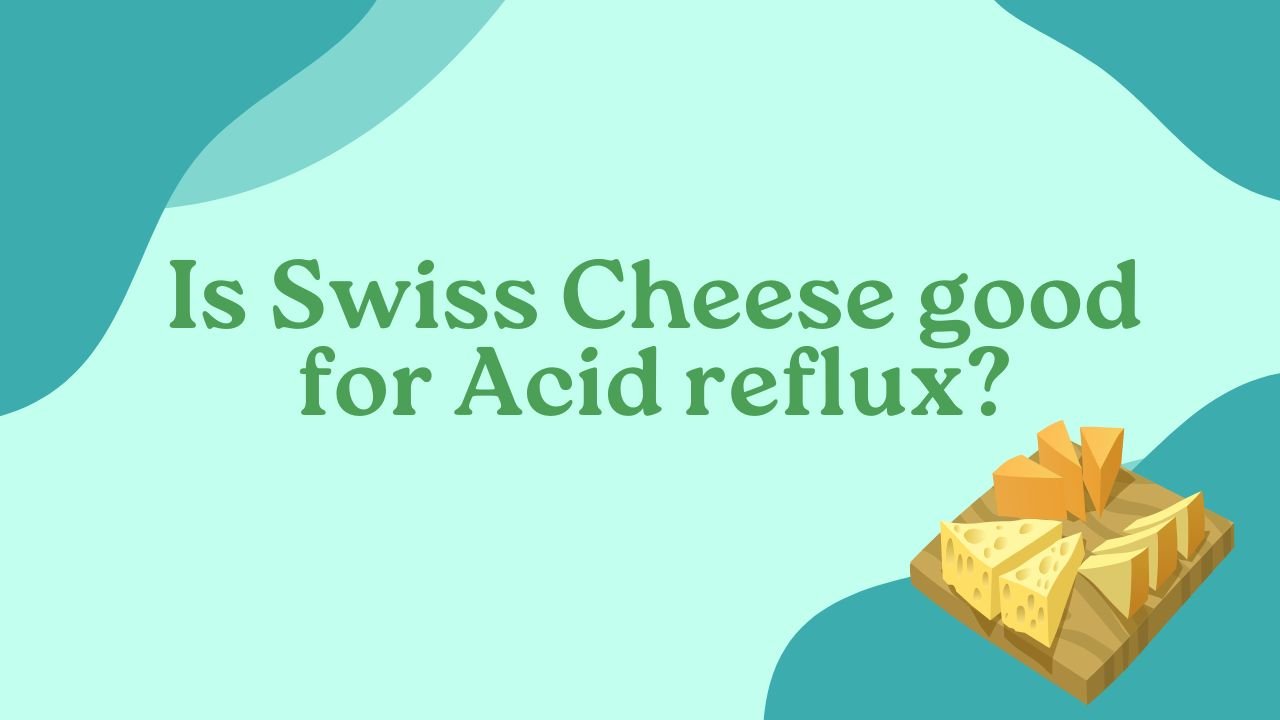
That brings us to the big question of the day: is Swiss cheese good for acid reflux? Or at the very least, is it less of a villain than cheddar or brie?
The short answer is that Swiss is actually one of the better choices you can make at the cheese counter. It’s not a “cure,” but in the hierarchy of reflux triggers, Swiss cheese is a lot closer to the “safe zone” than most of its cousins.
Let’s break down exactly why Swiss gets a passing grade, the science behind the “burn,” and how to eat it without making your esophagus regret everything.
The Bouncer of Your Stomach: LES 101
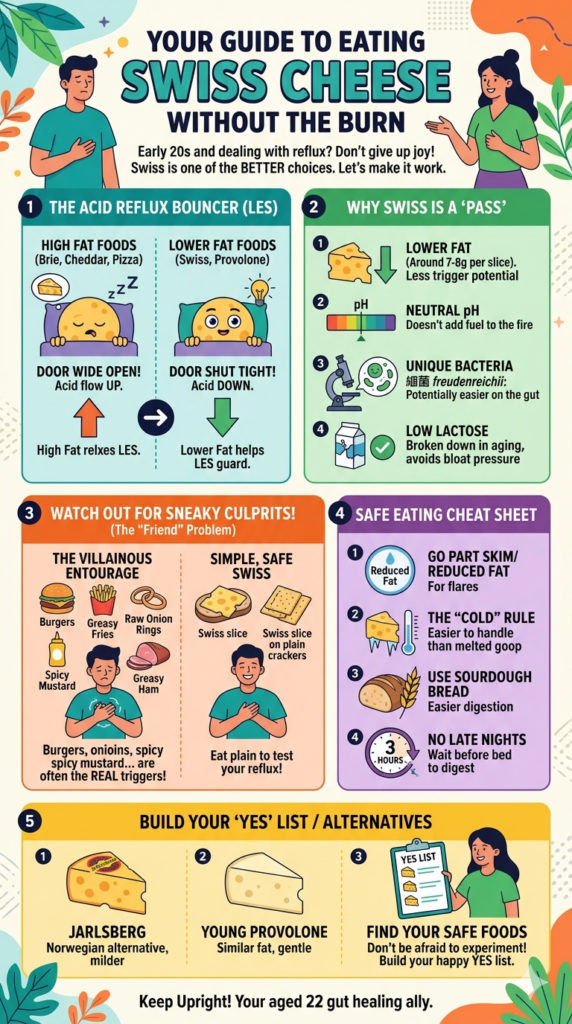
Before we talk about the holes in the cheese, we have to talk about the “trap door” in your throat. Your Lower Esophageal Sphincter (LES) is the muscle that acts like a bouncer for your stomach. It lets food in and keeps the acid down.
When you eat high fat foods, that bouncer basically takes a nap. Fat triggers the release of hormones that tell the LES to relax. When that door stays open, stomach acid starts creeping up into your esophagus, which is where that “chest on fire” feeling comes from.
This is why cheese is usually the first thing doctors tell you to cut. Most cheeses are packed with saturated fat. But Swiss cheese is a bit of a special case. It is generally lower in fat than many of its aged counterparts, which means it is less likely to tell your LES to go on strike.
The Swiss Stats: Why It Wins
When you look at the nutritional profile of Swiss cheese, it actually makes a lot of sense for a reflux friendly diet.
First off, let’s talk fat. A standard slice of Swiss usually has around 7 to 8 grams of fat. Compare that to a sharp cheddar or a creamy gouda, and you are often saving a significant amount of “trigger potential.” Lower fat means faster digestion, and faster digestion means less time for acid to build up and cause trouble.
Then there is the acidity. Some processed cheeses or super aged cheeses can be quite acidic themselves. Swiss cheese is relatively neutral on the pH scale. It’s not going to actively neutralize your stomach acid like a glass of alkaline water, but it isn’t going to add fuel to the fire either.
Finally, we have to talk about the “holes” or the “eyes.” Those holes are created by a specific type of bacteria called Propionibacterium freudenreichii. While it sounds like a tongue twister, this bacteria consumes lactic acid and releases carbon dioxide. This process is part of what makes Swiss cheese so unique and, weirdly enough, a bit easier on some people’s guts.
The Lactose Connection
A lot of people who struggle with acid reflux also have a hidden sensitivity to lactose. If your body is struggling to break down dairy sugars, it can lead to bloating and pressure in your gut. That pressure literally pushes upward, forcing stomach acid past your LES.
Swiss cheese is an aged cheese, which means most of the lactose is broken down during the cheesemaking process. It is naturally very low in lactose.
If you find that drinking milk or eating soft cheeses like mozzarella makes your reflux worse, it might actually be the lactose causing the pressure. Switching to Swiss can be a game changer because you get the cheese fix without the “bloat pressure” that triggers the reflux.
The “Friend” Problem: It’s Not Always the Cheese
I’ve said this before, but I’ll say it again because it is so important. Often, it isn’t the Swiss cheese that causes the flare up; it’s the “entourage” the cheese travels with.
Think about the most common ways we eat Swiss cheese. It’s usually on a deli sandwich with spicy mustard, onions, and maybe some greasy ham. Or it’s melted on a burger with a side of fries.
If you eat a Swiss and ham sandwich and get heartburn, don’t automatically blame the Swiss. The spicy mustard is a massive trigger. The raw onions are like a direct attack on your LES. And the high fat meat adds to the total “fat load” of the meal.
If you want to know if Swiss is truly safe for you, try it in a vacuum. Have a slice of Swiss on some plain crackers or a piece of sourdough toast. If you feel fine, then you know you just need to be more careful about what you pair it with.
How to Eat Swiss Like a Pro (Without the Burn)
If you are going to incorporate Swiss into your life, there is a strategy to it.
Go for the “Part Skim” or “Reduced Fat” Version: If you are in a particularly bad flare up phase, look for the lower fat versions. They still have that nutty, Swiss flavor but with even less risk of relaxing your LES.
The “Cold” Rule: Melting cheese actually makes the fats more “available” and easier for your body to absorb quickly, which can sometimes trigger reflux faster. Try eating your Swiss cheese cold or at room temperature. It sounds weird, but a cold slice of Swiss is often easier to handle than a gooey, melted mess.
Watch the Bread: If you are making a sandwich, skip the heavy, buttery brioche or the ultra processed white breads. A nice piece of sourdough is often better for reflux sufferers because the fermentation process makes it easier to digest.
Avoid the “Late Night” Trap: I know, a late night snack is the dream. But for us reflux warriors, eating cheese at 10 PM is a recipe for disaster. Try to make your cheese consumption a lunchtime or early dinner event. Give your body at least three hours to move that cheese out of your stomach before you lie down.
Alternatives if Swiss Still Bites
Every body is different. What works for my gut might not work for yours. If you try Swiss and it still feels like a mistake, don’t lose hope.
You can try “Jarlsberg,” which is technically a Norwegian cheese but is very similar to Swiss. Some people find it even milder and easier to digest.
You could also try a very young, mild Provolone. It has a similar fat profile to Swiss and is usually very gentle on the stomach.
And if all dairy is currently off the table, there are some great almond based “Swiss” style slices out there. Just check the label for coconut oil, as that high saturated fat can be just as bad for reflux as the real deal!
The Mental Game: Finding Your “Safe” Foods
Living with reflux at 22 is a mental marathon. It’s easy to get discouraged and feel like you can’t eat anything. But finding “safe” options like Swiss cheese is how you win.
It’s about building a “YES” list. Instead of focusing on all the things you can’t have (goodbye, spicy pepper jack), focus on the things you can. Swiss cheese allows you to still have a sandwich, still enjoy a snack board with friends, and still feel like a normal human being.
Don’t be afraid to experiment. Take notes on how you feel. If Swiss works for you, celebrate that win! It’s one more tool in your kit to manage your health without giving up your personality.
Final Thoughts
Swiss cheese is definitely one of the “good guys” in the world of acid reflux. Its lower fat content, low lactose levels, and neutral pH make it a much safer bet than the greasy, aged, or processed cheeses that usually cause chaos in our chests.
Just remember to keep an eye on your portions, watch out for sneaky triggers like mustard and onions, and give yourself plenty of time to digest before you hit the hay.
Your gut is a work in progress, and that is okay. Be patient with yourself, keep trying new “safe” foods, and remember that you aren’t alone in this.
Go grab a slice of Swiss, stay upright, and enjoy the fact that you found a way to keep cheese in your life. You’ve got this!