So you are on a liquid diet. Maybe you just had your wisdom teeth pulled, maybe you are prepping for a medical procedure, or maybe your gut is just on a total strike and needs a serious break. Whatever the reason, you are probably staring at a fridge full of juice and broth and wondering how you are going to survive the next few days without actually chewing anything.
It is a weird feeling being 22 and suddenly having to think about the mechanical consistency of your dinner. You go from grabbing a burger with friends to wondering if a smoothie is “too chunky” for your current restrictions. It feels like a major glitch in your social life, and let’s be real, it is a little bit depressing to see everyone else eating solid food while you are sipping on a lukewarm cup of chicken stock.
But then there is tomato soup.
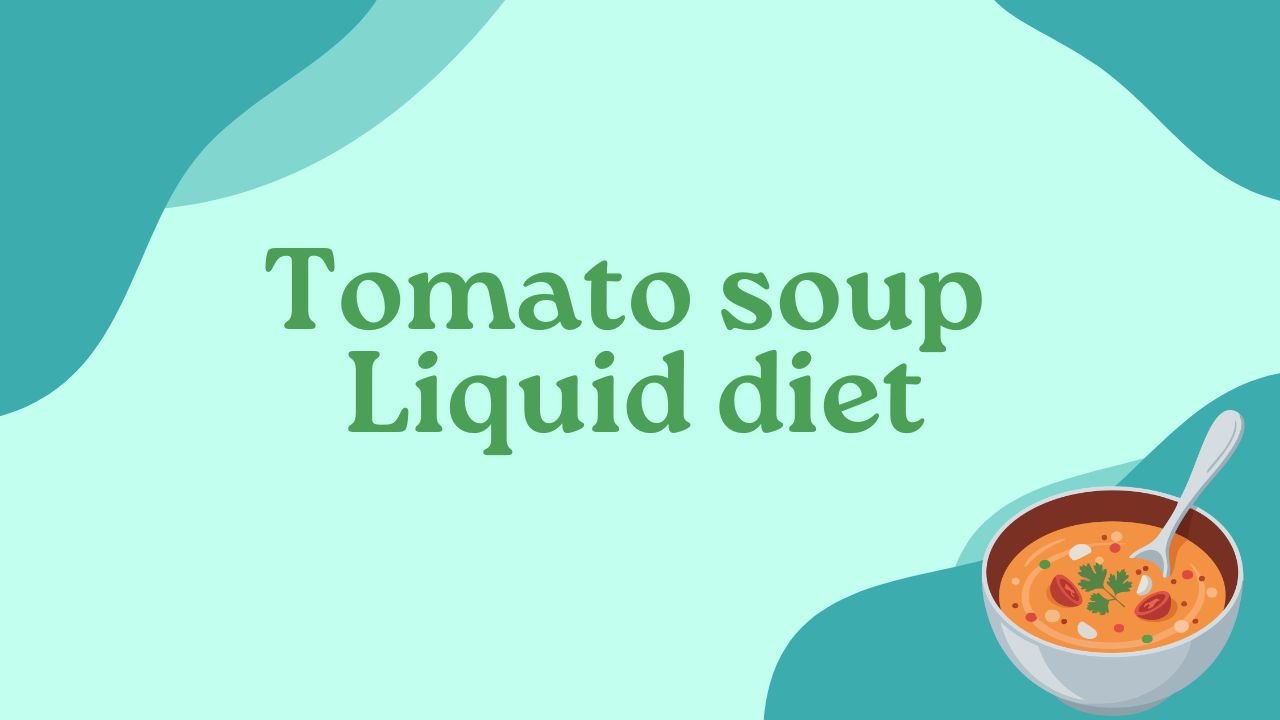
Tomato soup is the ultimate “cheat code” for a liquid diet. It is the one thing that actually feels like a real meal. It has flavor, it has warmth, and it doesn’t make you feel like you are just drinking flavored water. It is the OG comfort food for a reason.
But before you go stock up on every can of Campbell’s in the grocery store, we have to talk about how to do this correctly. Because a liquid diet isn’t just about the “liquid” part; it is about keeping your nutrition up and your gut happy while you heal.
We are going to dive into the science of why tomato soup works, how to make it “medical grade” smooth, and why the nutritional properties of your soup matter more than you think.
The Liquid Diet Spectrum: Where Does Tomato Soup Fit?
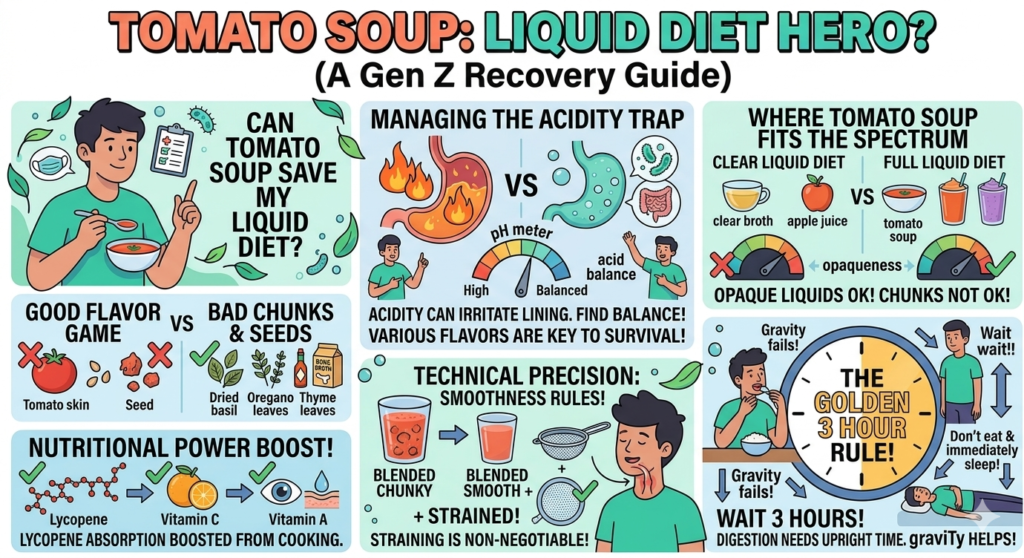
Not all liquid diets are the same. If your doctor told you to be on a “clear liquid diet,” then tomato soup is actually off the table. A clear liquid diet is strictly things you can see through, like apple juice, plain broth, and black coffee.
But if you are on a “full liquid diet,” tomato soup is the star of the show. A full liquid diet allows for things that are opaque or creamy, as long as there are absolutely no chunks, seeds, or skins.
This is where technical precision in cooking comes into play. If you are making your own soup, you have to be meticulous about the texture. You are aiming for a level of smoothness that would make a professional chef proud.
Any tiny bit of tomato skin or a stray seed can cause issues if you are recovering from surgery or dealing with an inflamed gut. Straining your soup through a fine mesh sieve is a non negotiable step if you want to stay safe and comfortable.
The Nutritional Power of the Tomato
If you are going to be living on liquids for a while, you need to make sure those liquids are actually doing something for you. Tomatoes are a powerhouse of nutrition, which is exactly what your body needs when it is trying to repair itself.
The big hero here is lycopene. Lycopene is a powerful antioxidant that gives tomatoes their red color. It is known for its ability to fight inflammation and support heart health. Interestingly, your body actually absorbs lycopene better from cooked tomatoes than from raw ones, making soup the perfect delivery system.
You are also getting a solid hit of Vitamin C and Vitamin A, both of which are essential for immune function and skin repair. When you are on a restricted diet, every milligram of vitamins counts.
This focus on nutritional science and the properties of what we eat is a key part of managing any recovery project, especially throughout a content production cycle focused on health guides in early 2026.
The Acidity Trap: Managing the Burn
We can’t talk about tomato soup without talking about acid. Tomatoes are naturally acidic, which can be a bit of a double edged sword.
If your liquid diet is because of something like a gallbladder removal or severe acid reflux, you have to be careful. High acidity can irritate the lining of your esophagus and stomach, leading to that “lava throat” feeling that we all want to avoid.
One way to manage this is to look for “low acid” tomato varieties if you are making your own soup. Yellow or orange tomatoes are often less acidic than the deep red ones.
Another trick is to add a tiny pinch of baking soda to your soup while it is simmering. The baking soda neutralizes some of the acid. Just don’t go overboard, or you will end up with a fizzy, weird tasting mess.
If you find that the acidity is still too much, you might want to try “wildcard” options like a blended butternut squash soup or a creamy carrot ginger soup. They give you that same satisfying, thick texture without the acidic punch.
Fiber and Fat: The Balancing Act
When you are on a liquid diet, you are usually missing out on fiber. Since the summary of your nutritional interest includes investigating the impact of fiber and fat content, you know that this can lead to some “sluggishness” in your digestion.
Traditional tomato soup is usually very low in fiber because the skins and seeds are removed. While this is great for gut rest, it isn’t great for keeping things moving.
If your diet allows it, you can try blending in a little bit of a “hidden” fat source to keep your energy up. A splash of heavy cream, a bit of coconut milk, or even a teaspoon of high quality olive oil can make the soup more satisfying and help your body absorb those fat soluble vitamins like Vitamin A.
Just be mindful of your fat threshold. If you are recovering from a gallbladder issue, too much fat at once can trigger cramping and discomfort. It is all about that technical precision in your dietary planning.
Making It Less Boring: The Flavor Game
The biggest challenge of a liquid diet is “flavor fatigue.” By day three of drinking the same red soup, you are going to want to throw the bowl across the room.
The key to survival is variety. You can change the “vibe” of your tomato soup without changing the consistency.
Try adding different dried herbs like basil, oregano, or a tiny bit of thyme. If you can handle a little heat, a drop or two of mild hot sauce can wake up your taste buds.
If you are craving something savory, try using a rich bone broth as the base for your tomato soup instead of just water or plain vegetable stock. It adds a depth of flavor and a boost of protein and collagen that can help with the healing process.
This interest in international and traditional recipes, like the soup guides created in May 2026, shows that flavor doesn’t have to be sacrificed even on a restricted diet.
The Mental Game: Staying Sane Without Solids
Let’s talk about the psychological side of this. Not being able to chew is hard. We use chewing as a way to relieve stress and feel satisfied. When you are restricted to liquids, your brain often feels like it hasn’t actually “eaten” yet, even if your stomach is full.
The “3 Hour Rule” still applies here. Even though it is liquid, don’t drink a massive bowl of soup right before you go to bed. Give your body time to process the acidity and the nutrients while you are still upright.
Also, try to “eat” your soup with a spoon rather than drinking it from a mug. It sounds silly, but the act of using a utensil and sitting at a table can trick your brain into feeling like it is having a real meal.
Take your time. Sip slowly. Savor the warmth.
Final Thoughts
Is tomato soup a liquid diet win? Absolutely. It is a nutritional powerhouse that provides comfort and flavor when you need it most.
By being precise with your textures, mindful of the acidity, and strategic with your “add ins,” you can turn a boring recovery period into something much more manageable.
Remember to listen to your body. If the soup feels too heavy or too acidic, pivot to a milder option. This is your recovery journey, and you are the one in control.
Be patient with yourself. This phase is temporary. Your gut is healing, your body is recovering, and soon enough you will be back to enjoying all the “crispy” and “chewy” things you miss.
Until then, grab your favorite mug, put on a show, and enjoy that warm, red hug in a bowl. You have got this!