So you finally had the gallbladder surgery. You are home, you are probably living in your oversized hoodies, and you are trying to figure out how to be a person again without that tiny little organ. After days of hospital water and maybe some questionable jello, all you want is a comforting cup of tea.
But then the anxiety kicks in. You remember that your digestive system is basically under new management. You’ve heard the horror stories about coffee and fried chicken, and now you are staring at your tea collection like it’s a minefield.
I totally get it. When you are 22 and trying to navigate a major health change, it feels like everyone is giving you “boomer” advice that doesn’t actually fit your life. You just want to know if you can have your matcha or your Earl Grey without needing to sprint to the bathroom ten minutes later.
The short answer? Yes, you can absolutely drink tea after gallbladder removal. In fact, for a lot of people, tea becomes their best friend during recovery. But because your “plumbing” is now a bit different, there are some ground rules you need to follow to keep your gut from throwing a tantrum.
Let’s break down the tea situation so you can get back to your cozy ritual without the stress.
The Post Op Reality Check: What Changed?
Before we talk about the tea, we have to talk about the “leaky faucet” situation. Normally, your gallbladder was like a storage locker for bile. When you ate something, it would release a big burst of bile to break things down.
Now that the storage locker is gone, your liver just drips bile into your small intestine 24/7. It’s a constant, slow drip.
This means your system isn’t as good at handling big “shocks” to the system. While tea isn’t as aggressive as a double shot of espresso, it can still stimulate your gut. If you drink the wrong kind of tea or add too much of the wrong stuff to it, you might experience cramping or that “emergency” urgency.
The Herbal Heroes: Your New Best Friends
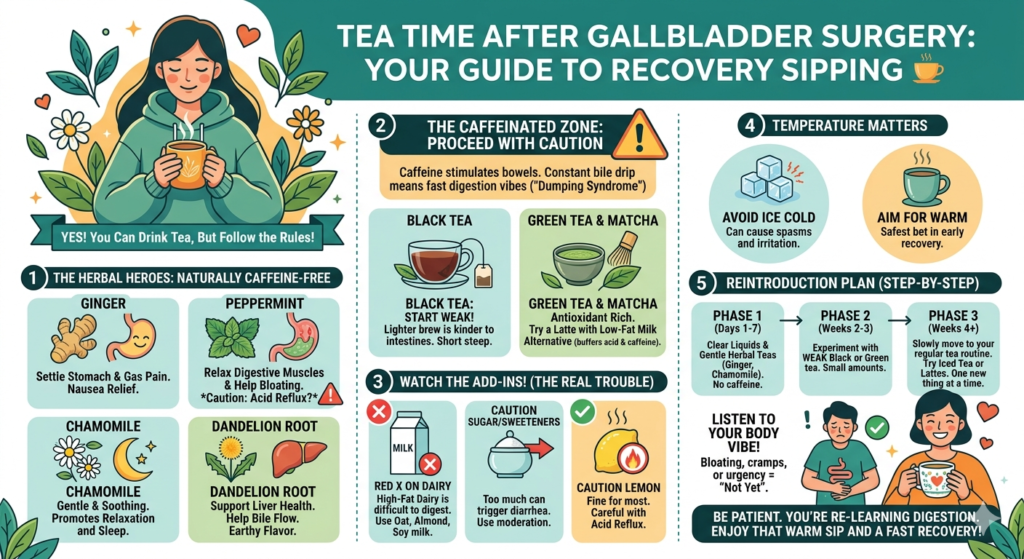
If you are in the early stages of recovery (think the first week or two), herbal teas are going to be your absolute MVPs. Most herbal teas are naturally caffeine free, which is huge because caffeine is a major stimulant for your bowels.
Ginger Tea: This is the undisputed queen of post op recovery. If you are still feeling a little nauseous from the anesthesia or just feeling “blah” after eating, ginger tea is a lifesaver. it helps settle the stomach and can actually help with the gas pain that a lot of people get after laparoscopic surgery.
Peppermint Tea: This one is a bit of a “vibe check” for your gut. Peppermint is amazing for relaxing the muscles in your digestive tract and helping with bloating. However, if you are also struggling with acid reflux (which sometimes happens after surgery), peppermint can sometimes make that worse. Try a small sip first to see how you feel.
Chamomile Tea: If the stress of surgery has your nervous system fried, chamomile is the way to go. It is gentle, soothing, and doesn’t put any pressure on your liver or bile ducts. It’s the perfect “before bed” ritual when you are trying to get comfortable enough to sleep.
Dandelion Root Tea: This one is a bit more niche, but it is actually great for gallbladder-less life. Dandelion root is known for supporting liver health and helping with bile flow. It has a slightly roasted, earthy taste that some people use as a coffee substitute.
The Caffeinated Zone: Proceed With Caution
This is where things get a little bit more complicated. Black tea, green tea, and oolong all contain caffeine.
Caffeine stimulates the muscles in your digestive tract. Because your bile is now dripping constantly, that extra stimulation can sometimes cause things to move too fast. We’re talking about “dumping syndrome” vibes, where your body just decides it’s done with whatever you just consumed.
Black Tea: This is the strongest of the bunch. If you love a good English Breakfast or Earl Grey, you don’t have to give it up forever. But in the first few weeks, try to make it a bit weaker than usual. Don’t let it steep for ten minutes until it’s jet black. A lighter brew is much kinder to your intestines.
Green Tea and Matcha: Green tea is packed with antioxidants, which is great for healing. However, it can also be a bit acidic. Matcha is even more concentrated. If you are a matcha lover, try starting with a “matcha latte” using a low fat milk alternative like oat milk. The milk can help “buffer” the hit of caffeine and acid.
The Add-Ins: Where the Real Trouble Starts
Most of the time, it isn’t the tea itself that causes a problem after gallbladder removal. It’s what we put in the tea.
Dairy is a Big Risk: High fat dairy is the number one enemy of someone without a gallbladder. If you are used to putting heavy cream or whole milk in your tea, you are basically asking for a stomach ache. The lack of concentrated bile makes it really hard to break down those fats. Switch to oat milk, almond milk, or soy milk for a while.
Sugar and Sweeteners: Too much sugar can also trigger diarrhea in some people after surgery. If you like your tea sweet, try a little bit of honey or a natural sweetener like stevia. Just don’t go overboard. Your gut is sensitive right now, and a “sugar rush” can lead to a “sugar flush.”
Lemon: A squeeze of lemon is usually fine and can actually help with digestion. Just be careful if you are prone to heartburn.
Temperature Matters More Than You Think
Here is a weird tip that no one tells you: the temperature of your tea can change how your gut reacts.
In the very beginning, “room temperature” or “warm” is your safest bet.
Ice cold drinks can sometimes cause the muscles in your digestive tract to spasm, especially when they are already irritated from surgery.
Super hot drinks can also be a bit of a shock. Aim for that “perfectly cozy” warm temperature that you can sip comfortably without blowing on it for ten minutes.
The Reintroduction Plan: Step by Step
You are 22, you have a life to get back to, and you don’t want to be thinking about your gut 24/7. The best way to get back to “normal” is to have a plan.
Phase 1 (Days 1 to 7): Stick to clear liquids and gentle herbal teas. Ginger and Chamomile are your besties. No caffeine yet.
Phase 2 (Week 2 to 3): Start experimenting with weak black or green tea. Maybe have half a cup in the afternoon and see how you feel. Keep it plain or use a splash of dairy free milk.
Phase 3 (Week 4 and beyond): You can probably start moving back to your regular tea routine. This is when you can try that iced tea or your favorite latte.
The golden rule is: only try one “new” thing at a time. If you have a new tea, don’t also try a new food on the same day. That way, if you feel sick, you know exactly what caused it.
Why Tea Might Be Better Than Coffee Right Now
If you were a big coffee drinker before surgery, you might be feeling the caffeine withdrawal. It’s tempting to try to swap one for the other immediately.
Tea is generally much easier on the system than coffee for a few reasons. It’s less acidic, the caffeine content is lower, and it contains something called L-theanine.
L-theanine is an amino acid that helps relax you. It balances out the “jitters” from the caffeine. This means you get a much smoother energy boost without the “spike and crash” that can send your digestive system into a tailspin.
If you are struggling to stay awake during the day but your stomach can’t handle coffee, a medium-strength black tea or a green tea is the perfect middle ground.
Listening to Your “Body Vibe”
At the end of the day, your body is the boss. Some people get their gallbladder out and can eat a cheeseburger and a coffee the next day (honestly, jealous). Others have a much longer road to recovery.
If you drink a cup of tea and you feel bloated, sharp pains in your side, or you have to run to the bathroom, that is your body’s way of saying “not yet.” It doesn’t mean “never.” It just means your liver and intestines need a little more time to sync up.
Don’t let it get you down. It’s a process. You are literally learning how to digest food in a whole new way.
Final Thoughts
You are going to be okay. Gallbladder removal is one of the most common surgeries out there, and millions of people live totally normal, tea-filled lives without one.
Be patient with your system. Start with the gentle stuff, watch out for the dairy, and give yourself permission to rest.
In a few months, this will all be a distant memory, and you will be back to ordering your favorite complicated tea drinks without a second thought.
Grab your favorite mug, put on a good show, and enjoy that warm sip. You’ve been through a lot, and you deserve a little bit of comfort.
Happy sipping, and here is to a fast recovery!