
Let’s be real for a second.
Most health advice out there is obsessed with fiber.
Eat more kale!
Swap that white bread for cardboard, I mean, whole grain!
Beans are your best friend!
But sometimes? Fiber is the enemy.
Whether you are dealing with a Crohn’s or Colitis flare-up, recovering from surgery, or your doctor just told you to give your gut a rest, you’ve landed in the world of the Low Residue Diet.
It’s basically the anti-salad lifestyle.
If you are like me and you are used to scrolling through aesthetic grain bowls on TikTok, this might feel like a total vibe shift. But honestly? It doesn’t have to be miserable.
I’ve put together a full guide and a deep dive into what you can actually eat, how to make it taste like real food, and a menu that won’t make you want to cry.
What Exactly Is a Low Residue Diet?
Okay, medical definitions can be boring, so here is the SparkNotes version.
Residue is basically the stuff your body cannot digest. Most of that is fiber.
When you eat a high-fiber diet, your digestive system has to work overtime to push all that bulk through. On a low residue diet, we are trying to create as little trash in your pipes as possible.
The goal is to keep things moving slowly and smoothly so your intestines can heal.
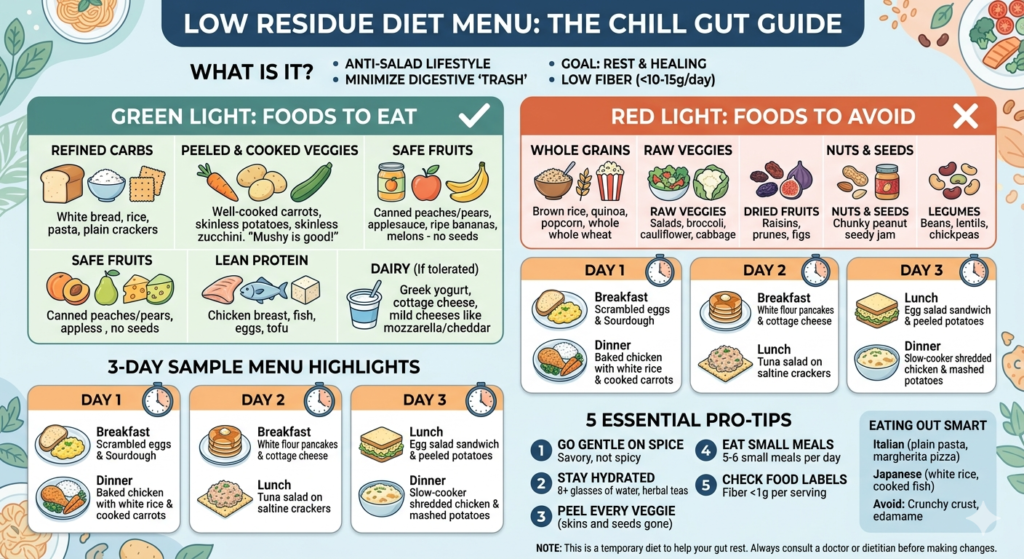
The Golden Rule is to keep your fiber intake under 10 or 15 grams a day.
This is not a weight loss diet or a permanent lifestyle change. It is a temporary “pause” button for your digestive tract. Think of it like putting your gut in a soft, fluffy robe and letting it take a long nap on the couch.
The Green Light List: What to Eat
Before we get into the menu, let’s talk about your new best friends.
1. Refined Carbs
This is the one time in your life where white is better than brown.
White bread, sourdough without seeds, and plain bagels are all safe bets.
White rice and white pasta are staples.
Pancakes and waffles made with white flour are great for breakfast.
Saltines or plain crackers are perfect for snacking.
The goal here is to avoid any grains that have the hull or the bran attached. If it looks like it came from a farm and hasn’t been processed, you probably shouldn’t eat it right now.
2. Peeled and Prepped Veggies
Fiber lives in the skins and seeds. We do not want them.
Well-cooked carrots are great, just make sure they are soft. Mushy is actually good here.
Potatoes without the skin are a lifesaver. You can mash them, boil them, or bake them. Just ditch the peel.
Skinless zucchini is another solid option if it is cooked down.
Strained vegetable juices are okay too, as long as there is no pulp left behind.
3. Safe Fruits
Again, seeds and skins are the villains.
Canned peaches or pears are great. Try to get them in juice instead of heavy syrup if you can.
Applesauce is a classic for a reason. It is basically the ultimate low residue snack.
Ripe bananas are your go-to fresh fruit. The yellower and softer, the better.
Melons like cantaloupe or honeydew are fine, but you have to skip the watermelon seeds.
4. Lean Protein
Most meat is actually low residue because it does not have fiber.
Chicken breast is great if it is shredded or roasted until tender.
Fish like white fish, salmon, or tuna is very easy to digest.
Eggs any way you like them are perfect. Just skip the peppers and onions you might usually throw in an omelet.
Tofu is a great plant-based option that is very gentle on the stomach.
5. Dairy
If you are not lactose intolerant, dairy is usually fine. If you are, stick to the lactose-free versions.
Greek yogurt is awesome, just make sure there are no fruit chunks or seeds in it.
Cottage cheese is a high-protein win.
Mild cheeses like mozzarella or cheddar can add a lot of flavor to boring meals.
The Red Light List: What to Avoid
If it is crunchy, seedy, or earthy, it is probably a no-go for now.
Whole grains like brown rice, quinoa, popcorn, and whole-wheat bread are off the table.
Raw veggies are officially cancelled for a bit. No salads allowed.
Cruciferous veggies like broccoli, cauliflower, and cabbage cause a lot of gas, which can be really painful during a flare.
Dried fruits like raisins, prunes, and figs are fiber bombs.
Nuts and seeds need to stay in the pantry. This includes chunky peanut butter and seedy jams.
Legumes like beans, lentils, and chickpeas are way too much work for a resting gut.
Your Ultimate Low Residue 3-Day Menu
I’ve designed this to feel like actual meals, not just hospital food. We want flavor without the fallout.
Day 1: The Transition Day
Breakfast Two scrambled eggs with a sprinkle of cheddar cheese. One slice of toasted white sourdough with a little butter. Half a ripe banana on the side. This gives you protein and comfort without any harsh textures.
Lunch Turkey and Swiss melt on a plain white roll. Avoid the lettuce and tomato. Just use a bit of mayo or mustard for moisture. A side of plain potato chips. Yes, really! They are low residue and the salt helps if you are feeling dehydrated.
Dinner Baked lemon-herb chicken breast. Keep the seasoning simple with salt, pepper, and maybe a little dried thyme. A side of white rice cooked with chicken broth instead of water for extra flavor. Well-cooked carrots with a hint of honey or maple syrup.
Snack A cup of smooth applesauce or a container of vanilla Greek yogurt.
Day 2: The Comfort Food Day
Breakfast White flour pancakes with a drizzle of maple syrup. A side of cottage cheese to keep you full until lunch.
Lunch Tuna salad made with canned tuna and plenty of mayo on saltine crackers. A side of canned peaches that have been drained of their syrup.
Dinner White pasta with a simple butter and parmesan sauce. If your gut is feeling okay, you can add a little bit of smooth tomato sauce. Just make sure it is strained to ensure no seeds or skins are hiding in there. Baked white fish like tilapia or cod with a squeeze of lemon.
Snack A few squares of plain milk chocolate or a slice of angel food cake.
Day 3: The Feeling Better Day
Breakfast A plain bagel with cream cheese. A small glass of pulp-free orange juice.
Lunch Egg salad sandwich on soft white bread. A side of peeled, boiled potato chunks with a little salt and olive oil.
Dinner Slow-cooker shredded chicken. Cooking it low and slow makes the protein fibers break down so it is super easy to digest. Mashed potatoes without the skins. Use a little milk and butter to make them creamy. Cooked zucchini that has been peeled and seeded before hitting the pan.
Snack A popsicle or a dish of lemon sorbet. It is refreshing and completely residue-free.
5 Pro-Tips for Surviving This Diet
Let’s be honest. This diet can get a little boring after a while. Here is how I stay sane while keeping my gut happy.
1. Spice is Not Always Your Friend
While herbs like salt, pepper, and dried oregano are usually fine, go easy on the spicy stuff. Hot sauce and chili flakes can irritate your lining even if they do not have fiber. Think savory, not spicy. Use garlic powder or onion powder instead of the real thing to get the flavor without the fibrous chunks.
2. Hydration is Everything
When you drop your fiber intake, your digestion can sometimes slow down too much. You need to drink plenty of water to keep things moving. Aim for at least 8 glasses a day. If you are bored of plain water, try herbal teas like peppermint or ginger. They are great for bloating and taste like an actual treat.
3. Peel Everything Twice
If you are craving a veggie, peel it. Then peel it again just to be sure. Then cook it until it is soft enough to mash with a fork. If it still has a crunch, it is not ready for you yet. Think of the texture of baby food. That is your goal for vegetables right now.
4. Small Meals are Better
Your gut is trying to rest. Do not overwhelm it with a massive three-course dinner. Try eating five or six small meals throughout the day instead of three big ones. It is easier on your system and keeps your energy levels from dipping.
5. Check Your Labels Like a Pro
Whole grain is usually a marketing win, but here, it is a red flag. Always check the nutrition label for Fiber. You are looking for 0g or 1g per serving. If you see 4g or 5g, put it back on the shelf. Also watch out for hidden “inulin” or “chicory root” in processed foods. Those are fiber additives that can really mess you up.
How to Handle Eating Out
The hardest part of any restricted diet is going out with friends. You don’t want to be the person who can’t eat anything, but you also don’t want to spend the rest of the night in pain.
If you are heading to a restaurant, Italian and Japanese places are usually your best bet.
At an Italian spot, order the white pasta with butter or a plain Margherita pizza. Just eat the middle of the pizza and leave the charred, crunchy crust bits.
At a Japanese restaurant, white rice and cooked fish like Unagi or grilled Salmon are perfect. Just make sure to skip the edamame and the seaweed salad.
Don’t be afraid to ask the server how something is prepared. Asking for potatoes without the skins is a totally normal request that they hear all the time.
The Emotional Side of the Diet
It is okay to be frustrated. Food is a huge part of our social lives and our culture. Being told you can’t eat a salad or a piece of whole-grain toast can feel really isolating.
Just remember that this is a season, not a forever sentence. Focus on the things you can have. This is the one time you are basically required to eat white bread and mashed potatoes. Lean into the comfort food aspect of it.
Try to find joy in the textures that are safe. A perfectly creamy bowl of pudding or a soft piece of white fish can be really satisfying if you change your mindset.
The Bottom Line
A low residue diet is a tool to help your body reset. It might feel weird to skip the greens, but listen to your body. If you follow this menu and stay away from the scratchy foods, you will likely start feeling a lot more comfortable soon.
Always make sure to check in with your doctor or a dietitian before making big changes to your diet, especially if you are managing a chronic condition. I am just a writer sharing what works, not a medical professional!
You’ve got this. Take it one meal at a time and give your gut the break it deserves.