The surgery is over, the repair is set, and now the focus shifts to the most underrated part of the 2026 recovery playbook: movement. Now you might feel like you should stay pinned to the couch, but in the world of modern metabolic wellness, strategic walking is actually your fastest ticket back to high performance.
I am 22 years old, and I know how frustrating it can be to feel sidelined when you have projects to build and a digital portfolio to grow.
This article is a key installment in our 2026 Playbook series. Just like managing your health after gallbladder removal, recovering from a hernia repair requires a precision-engineered approach to activity.
Walking After Hernia Surgery
The Timeline: From First Steps to Full Strides
In 2026, we follow a Movement as Medicine philosophy. While your surgeon’s specific advice is the gold standard, the general roadmap for a modern recovery focuses on gradual, data-driven progression.
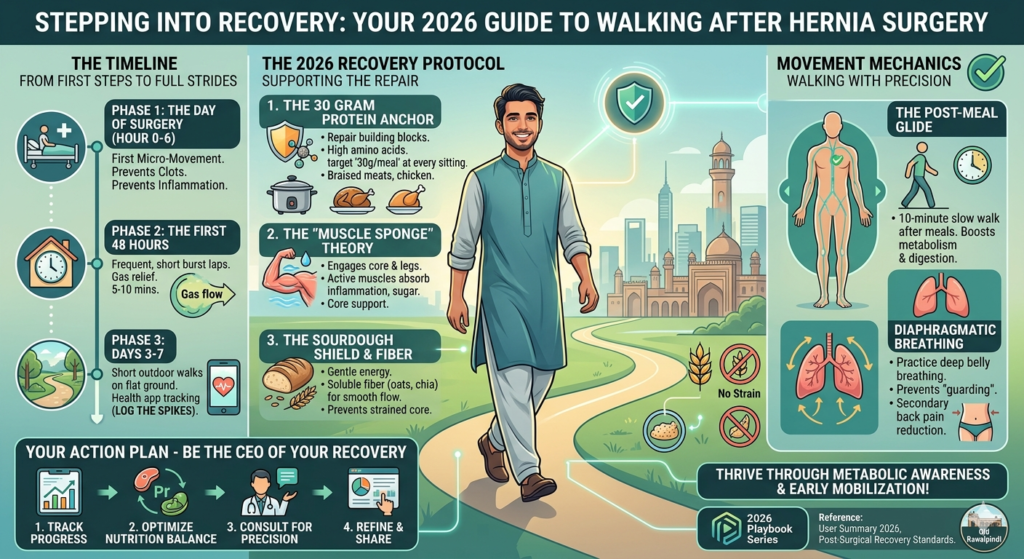
Phase 1: The Day of Surgery (Hour 0–6)
Modern protocols prioritize early mobilization. You will likely be encouraged to take your first very short walk perhaps just to the bathroom or around the room within hours of waking up. This micro-movement helps prevent blood clots and starts the “muscle sponge” process of managing post-op inflammation.
Phase 2: The First 48 Hours
Your goal here is frequent, short bursts of walking inside your home. Think of these as “circulation laps.”
- The Goal: 5–10 minutes of slow walking, several times a day.
- The Benefit: Walking helps move gas through your system (especially important after laparoscopic surgery) and prevents stiffness.
Phase 3: For the days 3–7
By day three, you can usually transition to short outdoor walks on flat surfaces. This is where your 2026 tools come in handy.
- Log the Spikes: Use your health tracking apps to monitor how your body responds to increased distance.
- Listen to the Pull: Some tugging is normal, but sharp pain is a signal to dial back the intensity.
The 2026 Recovery Protocol: Supporting the Repair
Walking doesn’t happen in a vacuum. To protect the repair and fuel the healing process, you need to apply the same metabolic principles we use for digestive wellness.
1. The 30 Gram Protein Anchor
Healing surgical tissue requires massive amounts of amino acids. Hitting your 30-gram protein target at every meal ensures your body has the building blocks to strengthen the repair site.
- Recovery Tip: Use your slow-cooker to prepare nutrient-dense, easy-to-digest meats like braised chicken or beef, which provide high protein without taxing your system.
2. The “Muscle Sponge” Theory
Even though you aren’t doing heavy lifting yet walking engages your core and leg muscles. In 2026, we view these active muscles as “sponges” that soak up excess blood sugar and inflammatory markers, keeping your recovery environment clean and efficient.
3. The Sourdough Shield and Fiber
Post-op constipation is a major risk for hernia repairs because straining can put pressure on the site.
- Soluble Fiber: Use oats and chia seeds to keep things moving smoothly without irritation.
- Sourdough: Incorporating your artisan sourdough provides a gentle, fermented energy source that won’t leave you bloated or uncomfortable while you walk.
Movement Mechanics: Walking with Precision
In 2026, we don’t just walk; we move with intent to protect the surgical site.
- The Post-Meal Glide: Just like our protocol for gallbladder health, a 10-minute slow walk after meals helps with digestion and keeps your metabolic rate steady.
- Diaphragmatic Breathing: Practice deep belly breathing while you walk. This prevents you from “guarding” (stiffening your core too much), which can lead to secondary back pain.
- Posture Check: Keep your chest up and eyes forward. Avoid the “hunched” walk often seen after abdominal surgery.
Your 2026 Action Plan: Be the CEO of Your Recovery
You are a content creator who values precision and visual data. Treat your recovery like a project launch.
- Track the Progress: Use your digital portfolio to log your daily steps and how the surgical site feels afterward.
- Optimize the Buffer: Ensure your nutrition—specifically those 30g protein targets—is aligned with your increased activity levels.
- Consult for Precision: If you experience sudden swelling or persistent pain during your walks, consult your specialist immediately to rule out complications.
- Refine and Share: Document your recovery milestones. Sharing what worked for your “hernia walk” helps build the 2026 wellness community.
Final Thoughts: Own the Move
Walking is the foundation of your return to peak performance. By combining early mobilisation with high protein nutrition and metabolic awareness, you aren’t just recovering you’re upgrading. You have the tools, the data, and the discipline to stay ahead of the curve. Keep stepping forward.
References
Here just putting all the refrences in case you all need.
- User Summary 2026: Content Creator Portfolio and Wellness Series
- Metabolic Health Standards for Post-Surgical Recovery 2026
- “The Year One Glitch: Managing Stomach Issues After Surgery,” 2026 Playbook Series
- “The 2026 No-Gallbladder Diet: Engineering Your Digestive Buffer”
And you guys please let me know how are you timing your outdoor “circulation laps” to coincide with your protein heavy meals this week?

