
Let’s be real for a second.
When you hear the word “fiber,” what’s the first thing that pops into your head? For me, it used to be those dusty bran muffins my grandma eats or those weird, chalky supplements that look like bird food. It’s not exactly the “hottest” topic in wellness. It’s not a flashy superfood from the Amazon rainforest, and it doesn’t have a cool aesthetic like a neon green matcha latte.
But honestly? Fiber is low-key the most underrated MVP of our diets.
I’m 22, and like most people my age, I spent a good chunk of my college years living on iced coffee, ramen, and whatever was available at the late-night drive-thru. I was constantly tired, my skin was breaking out, and I felt bloated literally 24/7. I thought that was just what being an adult felt like.
Spoiler: It’s not.
After doing a deep dive into gut health because apparently that’s what we do in our 20s now, I realized I was getting maybe 10 grams of fiber a day. The recommendation? Around 25 to 30 grams. I was failing.
So, I decided to fix it. But I wasn’t about to start eating wood chips. I wanted actual, tasty food.
If you’re looking to get your digestion on track, feel fuller for longer, and actually have some energy that doesn’t come from a third shot of espresso, this is for you. Here is the ultimate, totally-doable high fiber meal plan that actually tastes good.
Why Should We Even Care About Fiber?
Before we get into the food, let’s talk about the “why.”
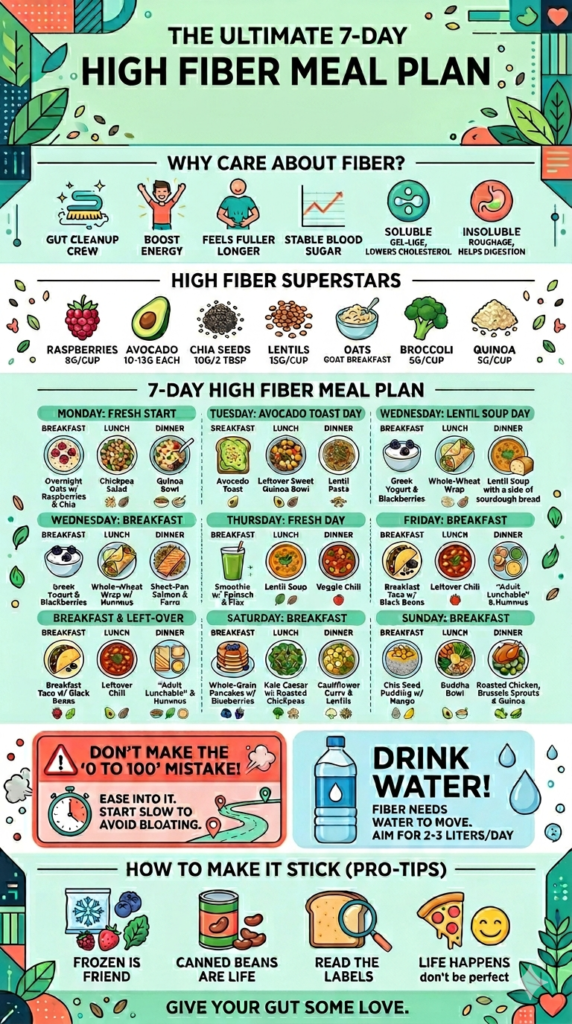
Fiber is basically the “cleanup crew” for your body. It’s a type of carb that your body can’t digest. Instead of being broken down into sugar, it passes through you, cleaning out your system and keeping things moving.
There are two main types you need to know about.
First, there is soluble fiber. This turns into a gel-like substance in your gut. It helps lower cholesterol and keeps your blood sugar from spiking. This is the stuff that prevents that inevitable 3 PM crash where you feel like you need a nap under your desk.
Then, there is insoluble fiber. This is the “roughage.” It adds bulk and helps with, well, the bathroom stuff.
When you get enough of both, your skin looks better, your mood stabilizes, and you don’t feel like you need a nap after every single meal. Plus, it keeps you full. If you’re someone who is always “snacky” an hour after eating, you probably need more fiber.
It’s also about the long game. Good gut health is linked to a stronger immune system and even better mental health. Since most of our serotonin is actually produced in the gut, eating more beans might actually make you happier. Science is wild.
The High Fiber Superstars: Your New Grocery List
If you’re going to do this, you need to stock up on the right stuff. These are the items I always have in my kitchen now. They are affordable, easy to find, and they don’t require a degree in culinary arts to prepare.
Raspberries are the hidden gems of the fruit world. One cup has about 8 grams of fiber. They are great in yogurt or just as a snack.
Avocados are essential. Yes, they’re extra at Chipotle, but they’re also fiber bombs. One avocado has around 10 to 13 grams.
Chia Seeds are a must. Put them in everything. They don’t taste like anything, but they pack a huge punch. Two tablespoons give you about 10 grams of fiber.
Lentils and Chickpeas are cheap, easy, and shelf-stable. I keep cans of these in my pantry at all times for quick meals.
Oats are the GOAT of breakfast. They are filling, cheap, and you can make them taste like dessert if you try hard enough.
Broccoli is my favorite “I need a vegetable” vegetable. It’s sturdy, tastes great roasted, and provides about 5 grams of fiber per cup.
Quinoa is a great swap for white rice. It’s a complete protein and has significantly more fiber than your standard white rice.
The 7-Day High Fiber Meal Plan
I’ve kept this simple. I’m not a chef. I don’t have six hours to meal prep on a Sunday. This plan is designed for people with jobs, classes, and lives.
Monday: The Fresh Start
Breakfast: Overnight oats with almond milk, a massive handful of raspberries, and a tablespoon of chia seeds. Let them sit in the fridge overnight and you have a grab-and-go meal.
Lunch: A big salad with spinach, a full cup of chickpeas, cucumber, and a tahini dressing. The chickpeas provide the protein and the fiber to keep you from crashing.
Dinner: Quinoa bowl with roasted sweet potatoes, black beans, and a dollop of Greek yogurt or avocado. Sweet potatoes are another great source of fiber that feels like comfort food.
Snack: An apple with peanut butter. Leave the skin on the apple because that’s where the fiber lives.
Tuesday: Keeping the Momentum
Breakfast: Two slices of whole-grain toast topped with smashed avocado and red pepper flakes. Look for bread that says “sprouted” or “100% whole wheat” to maximize the benefits.
Lunch: Leftover quinoa bowl. Seriously, cook once and eat twice. It’s the only way to survive a busy week.
Dinner: Lentil pasta with marinara sauce and sautéed spinach. Lentil pasta is a game changer. It tastes almost exactly like regular pasta but has way more fiber and protein.
Snack: A handful of almonds. They are great for a quick energy boost.
Wednesday: The Mid-Week Grind
Breakfast: Greek yogurt parfait with high-fiber granola and blackberries. Blackberries are right up there with raspberries in terms of fiber content.
Lunch: A whole-wheat wrap filled with hummus, shredded carrots, sprouts, and turkey or tofu. Hummus is basically just blended fiber, so don’t be shy with it.
Dinner: Sheet-pan salmon or tempeh with roasted broccoli and farro. Farro is an ancient grain that has a really nice chewy texture and a nutty flavor.
Snack: Edamame with a little sea salt. You can buy these frozen and just microwave them for two minutes.
Thursday: Comfort Food the Healthy Way
Breakfast: Smoothie with spinach, frozen banana, protein powder, and flax seeds. Flax seeds are another “invisible” fiber source you can add to almost anything.
Lunch: Lentil soup with a slice of sourdough. Canned soup is totally fine, just check the label to make sure it’s not loaded with sodium.
Dinner: Turkey or veggie chili packed with kidney beans, black beans, and bell peppers. Chili is the king of high-fiber dinners. It’s basically a bowl of beans and veggies.
Snack: Pear slices. Pears actually have more fiber than apples, which most people don’t realize.
Friday: Low Effort, High Reward
Breakfast: Scrambled eggs with black beans and salsa tucked into a small corn tortilla. It’s like a breakfast taco but better for your gut.
Lunch: Leftover chili. It honestly tastes better the next day after the spices have had time to settle.
Dinner: “Adult Lunchable” featuring high-fiber crackers, hummus, raw veggies, some cheese, and grapes. Perfect for when you’re too tired to actually cook.
Snack: Popcorn. Did you know popcorn is a whole grain? It’s actually a great fiber snack as long as you don’t drench it in movie theater butter.
Saturday: Brunch Vibes
Breakfast: Whole-grain pancakes topped with blueberries and a side of turkey bacon or tempeh. Blueberries add a nice hit of antioxidants along with the fiber.
Lunch: Kale Caesar salad with crispy roasted chickpeas instead of croutons. Roasting chickpeas in the oven with some spices makes them crunchy and delicious.
Dinner: Cauliflower and lentil curry over brown rice. Curry is a great way to eat a lot of vegetables without feeling like you’re just eating a “salad.”
Snack: Dark chocolate and a few walnuts. A little treat that still has some nutritional value.
Sunday: The Reset
Breakfast: Chia seed pudding made with coconut milk and topped with mango. It feels like a tropical dessert but it’s actually a fiber powerhouse.
Lunch: Buddha bowl with roasted cauliflower, beets, edamame, and a peanut dressing. Beets are amazing for blood flow and digestion.
Dinner: Roasted chicken or tofu with a double serving of Brussels sprouts and quinoa. Brussels sprouts are highly underrated. When you roast them until they’re crispy, they’re incredible.
Snack: Raw veggies and spicy hummus. Classic and effective.
Important: Don’t Make This Mistake
I learned this the hard way. Do not go from zero to 100 on fiber overnight.
If you go from eating almost no fiber to eating 35 grams in one day, your stomach is going to be very unhappy with you. We’re talking bloating, gas, and cramps. It’s not a good look.
You have to ease into it. Start by swapping your white bread for whole grain. Then add a serving of fruit to your breakfast. Then add the beans to your lunch. Give your gut bacteria time to catch up to the new workload. It’s a marathon, not a sprint.
Also, and this is the most important part, you must drink water. Fiber needs water to move through your system. If you eat a ton of fiber but don’t hydrate, it’s basically like trying to wash a giant load of laundry with no water. It just gets stuck. Carry a water bottle with you everywhere and aim for at least 2 to 3 liters a day.
How to Make It Stick
Look, we’re 22. Life happens. Some days you’re going to end up eating pizza at midnight with your friends or grabbing a burger because you forgot to meal prep. That’s totally fine. The goal isn’t to be perfect. It’s about building a foundation so that most of the time, you’re fueling your body in a way that makes you feel good.
A few pro-tips for my fellow busy humans:
Frozen is your friend. Frozen berries and veggies are just as nutritious as fresh ones. They’re cheaper and they won’t rot in your fridge after three days of you forgetting they exist.
Canned beans are life. Rinse them off, throw them in a pan, and you have a high-fiber protein source in about two minutes.
Read the labels. Not all “whole grain” bread is created equal. Look for at least 3 to 5 grams of fiber per slice. If it says “enriched wheat flour,” it’s basically just white bread in disguise.
The Verdict
After sticking to a high-fiber plan for a few months, I can honestly say I feel like a different person. I don’t get that “heavy” feeling after lunch anymore. My skin cleared up, which was a total bonus I wasn’t expecting. I actually have the energy to hit the gym after work instead of just melting into my couch and scrolling on my phone for four hours.
It’s not about restriction or “dieting” in the traditional sense. It’s just about giving your body the tools it needs to actually function properly.
So, grab some raspberries, hydrate like it’s your job, and give your gut some love. Your future self will definitely thank you for it.
What are you adding to your grocery list first? Personally, the raspberries are always my first pick. Stay healthy and keep that gut happy.


