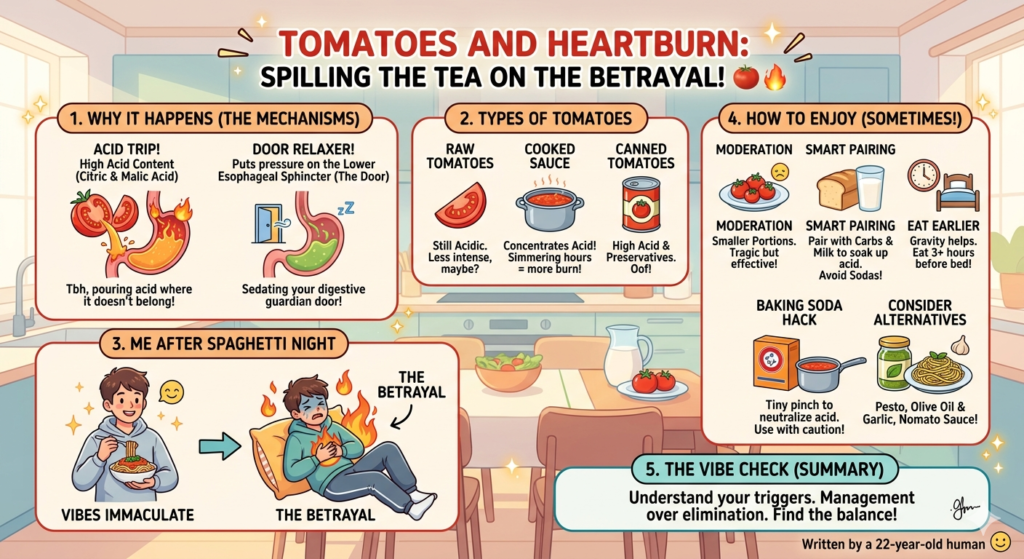
Have you ever settled down for the perfect night? I’m talking sweatpants, your favorite streaming show, and a massive bowl of spaghetti. The vibes are immaculate.
But then, an hour later, it hits you. That slow burn rising up your chest. It feels like you swallowed a small star, and not in a cool, superpower way. Tbh, it’s a total betrayal. The culprit? Often, it’s that gorgeous, innocent-looking red sauce.
It makes you wonder: why does something that tastes so good have to hurt so much? Are tomatoes really the villain here, or is my digestive system just drama? Let’s get into the actual science of why tomatoes give us that dynamic-dying feeling and if we can ever enjoy a pizza again without the regret.
Wait, What Exactly is Heartburn Anyway?
Okay, before we officially cancel tomatoes, let’s make sure we’re talking about the same thing. Heartburn isn’t actually about your heart. It’s that painful, burning feeling in your chest, right behind your breastbone. It can last anywhere from a few minutes to several hours and usually gets worse after you eat (shocking!) or when you lie down.
It’s often a symptom of acid reflux. Basically, your stomach contains a super strong acid (hydrochloric acid) that is supposed to break down your food. It’s meant to stay in your stomach.
Think of your esophagus (the food tube) and your stomach having a little door between them. It’s called the lower esophageal sphincter. It opens to let food in, then is supposed to slam shut tight.
But sometimes, that door gets lazy. It can relax too much or too often. When that happens, the acid from your stomach splashes back up into your esophagus. Since the lining of your esophagus is super sensitive, that acid burns.
Hence, heartburn. It’s essentially your stomach acid visiting a neighborhood where it doesn’t belong and causing absolute chaos.
The Big Question: Do Tomatoes Actually Cause It?
The short answer: For a lot of people, a massive yes. Tomatoes are widely considered one of the biggest food triggers for heartburn and acid reflux.
It’s completely unfair because tomatoes are literally the backbone of some of the best foods on the planet. Pizza, lasagna, pico de gallo, salsa… it’s a list of happiness. And all of them can potentially become the reason you are propped up on three pillows at 2 AM.
Tbh, I used to think my body was just picking on me specifically. Like, why can everyone else eat lasagna, and I’m here dynamic-dying? Turns out, it’s a totally common issue, and the science behind it is pretty straightforward.
The Science of the Burn: Why Tomatoes Are Triggering
So why is this specific fruit (yeah, it’s a fruit, remember?) such a problem? There are two main reasons.
1. The Acid Trip
The main problem with tomatoes is that they are super high in acid. They contain both citric acid and malic acid. Your stomach is already designed to handle acid, but your esophagus is not. When you eat a lot of tomatoes, especially on an empty stomach, you are essentially pouring a high-acid liquid right into a system that is struggling to keep its own acids contained.
It’s like adding gasoline to a fire that is already smoking. If your little esophageal sphincter ‘door’ is even slightly weak, the extra acidity of the tomatoes makes it much more likely that the splashback will be incredibly painful.
2. Puts Pressure on the Door
Remember that esophageal door (the lower esophageal sphincter)? A lot of factors can cause it to relax, and some studies suggest that high-acid foods can exacerbate that relaxation. When the door doesn’t close all the way, it’s an invitation for everything in your stomach (food, stomach acid, and the tomato acids) to reflux.
Think of it as the tomatoes are essentially giving that door a sedative. It gets sleepy, it lets its guard down, and chaos ensues.
Is there a Difference? Raw, Cooked, and Canned Tomatoes
This is a hot take, but I always assumed raw tomatoes were safer. Like, they seem fresher and less intense than a simmered sauce, right?
Actually, the science doesn’t fully back that up. Both raw and cooked tomatoes are highly acidic.
However, cooking can sometimes concentrate that acidity. A slow-cooked spaghetti sauce that has simmered for hours might have a much higher acid density than a fresh slice of raw tomato on a burger. Canned tomatoes can also be high in preservatives and extra citric acid added during the process, which doesn’t help.
There is a myth that cooking tomatoes removes the acid. Tbh, that is completely false. While cooking some foods can change their properties, the actual organic acid content in tomatoes doesn’t disappear; it just gets mixed up in the sauce, ready to visit your esophagus.
My Experience (and Yours Probably Too)
It’s totally unfair, right? You want to go out for a nice dinner. Everyone wants pizza. You order the pizza. You eat two slices. And then you are the designated ‘stomach issues’ friend for the rest of the night. It completely ruins the vibe.
I’ve had to have a serious conversation with my body about its limits. Moderation is literally the hardest thing to practice when a pizza is sitting in front of you. But I’ve learned that for some foods, the immediate ‘yes’ of eating it is followed by hours of the slow-burn ‘no’ afterward.
And it’s not just heartburn; sometimes, for me, it’s also dynamic-bloat and general discomfort. It’s like my stomach is personally offended that I didn’t choose a bland, boring meal.
How to Enjoy Tomatoes (Sometimes!)
Okay, so are tomatoes officially cancelled? Do we have to live a life without salsa?
Maybe not entirely. For most people with mild to moderate reflux, the goal is management, not complete elimination. Tbh, a life without tomatoes feels like a life without joy, and I am not ready to commit to that.
Here are a few hacks that people have found that might help you enjoy that spaghetti night with slightly less regret.
1. Moderation is (Annoyingly) Key
This is the least fun advice, but it’s the most effective. Instead of a massive bowl of spaghetti with extra sauce, maybe try a smaller portion or a type of pasta dish that isn’t as sauce-heavy (like a light olive oil or garlic sauce with just a few tomatoes).
Instead of dynamic-slathering sauce on everything, think of it as a accent. It’s a sad adjustment, but it makes a difference.
2. Pair Them Wisely
Don’t eat tomatoes on an empty stomach. If you have some salsa, eat it with a lot of chips. If you are having spaghetti, have some bread first. The carbs can help soak up and neutralize some of the extra acidity before it starts causing chaos.
A huge trigger for me is pairing acid with acid. Like, a high-acid tomato sauce followed by a high-acid soda. That is literally a recipe for disaster. Try pairing your tomato dish with water or milk (which is basic and can help neutralize acid) instead.
3. Eating Earlier
One of the worst things you can do for heartburn is eat a heavy, acidic meal right before bed. Your body needs gravity to help keep everything in your stomach. When you lie down flat, it’s basically an ‘all-you-can-splash-back’ open bar for the stomach acid.
Try to eat your main tomato meal for lunch, or ensure you have at least three hours after dinner before you try to sleep.
4. The Baking Soda Trick (Use with Caution)
Tbh, this sounds like an ancient remedy, but some people say that adding just a tiny, tiny pinch of baking soda to your homemade tomato sauce while it is simmering can help neutralize some of the acidity.
You have to be super careful with this, as too much baking soda will make your sauce taste soapy. We’re talking a tiny pinch. It won’t fix everything, but it might just shave off enough of the acidic edge to make it tolerable.
5. Consider Alternatives
This is the hardest conversation. If you are dynamic-dying after every tomato meal, it might be time to accept that you and tomatoes just don’t have the same energy.
Consider using tomato alternatives. For pizza or pasta, you can try an olive oil and garlic sauce (aglio e olio), a cream-based sauce (like alfredo, though this is high-fat and can be its own trigger!), a pesto, or even a ‘nomato’ sauce (a blend of other roasted vegetables like carrots, beets, and onions). It’s not the same, but it’s a way to enjoy pasta night without the fear.
Summary: A Vibe Check on Your Stomach
Living with heartburn is all about understanding your personal triggers and managing them.
Are tomatoes the enemy? For our esophaguses, kind of, yeah. They are delicious, high-acid betrayers. They aren’t trying to dynamic-ruin your life, but they are a product of science that our modern-day digestive systems struggle with.
The next time you settle in for that perfect spaghetti night, just do a little vibe check with your stomach. Maybe the answer is moderation. Maybe the answer is an aglio e olio pasta instead. The main goal is enjoying your meal and your night without feeling like your chest is on fire.
And tbh, that feeling is worth the slight dietary adjustment.