So you are finally home. The hospital gown is a distant, scratchy memory, and you are currently living in your most oversized hoodie. You are likely sitting in your rental apartment, staring at the beige carpet, and trying to remember what it feels like to have a digestive system that doesn’t feel like a high-stakes science experiment.
Gallbladder surgery is one of those things that people tell you is “routine,” but when it is your body and your missing organ, it feels like anything but routine. You are navigating this weird post-op world where every snack feels like a potential landmine. After days of clear broth, lukewarm tea, and that specific brand of hospital jello that tastes like red 40 and regret, you just want something real.
You want something crunchy. You want something comforting. You want toast.
But then the “gut anxiety” kicks in. You have heard the horror stories about what happens when you eat the wrong thing after gallbladder removal. You’ve heard about the “emergency sprints” to the bathroom and the intense cramping. You are 22 years old and you just want to eat a piece of bread without it becoming a whole ordeal.
The good news? Toast is basically the MVP of the post-gallbladder world. If there was a starter pack for “how to be a person again after surgery,” a loaf of bread and a toaster would be right at the top of the list.
Let’s break down why toast is the goat for recovery and how to navigate the “toppings minefield” so you can enjoy your crunch in peace.
The New Plumbing Reality: Why Fat Matters
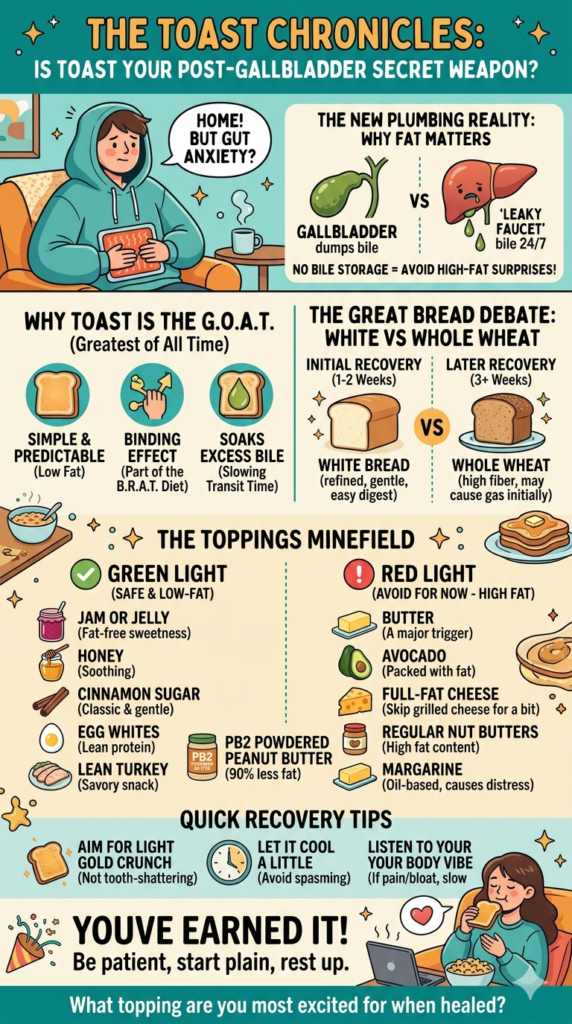
Before we get to the bread, we have to talk about the “leaky faucet” situation happening in your midsection. Normally, your gallbladder was the storage locker for bile. When you ate something fatty, it would dump a bunch of bile in to break things down.
Now that the locker is gone, your liver is just dripping bile into your small intestine 24/7. It is a constant, slow drip. This means your system is great at handling “boring” foods that don’t need much help, but it gets absolutely wrecked by high-fat “surprises.”
Toast is the ultimate “boring” food in the best way possible. It is naturally very low in fat (well, until you start adding stuff to it), which means it doesn’t demand a “bile burst” from a storage unit that no longer exists. It is gentle, predictable, and stays in its lane.
Why Toast Is a Recovery Essential
When you are in those first few days or weeks of recovery, your digestive tract is basically in “sensitive mode.” It has been through a literal trauma, and it is trying to figure out how to process food under this new management.
Toast is part of the legendary BRAT diet: Bananas, Rice, Applesauce, and Toast. This diet has been the gold standard for upset stomachs for decades because these foods are “binding.”
One of the most annoying side effects of gallbladder removal is “the runs.” Because bile is now irritating your intestines constantly, things can move way too fast. Toast contains simple starches that help soak up some of that excess bile and liquid, helping to “firm things up” and slow the transit time down. It’s basically a sponge for your internal plumbing.
The Great Bread Debate: White vs. Whole Wheat
Usually, we are told that white bread is the “bad” choice and whole wheat is the “healthy” choice. In the real world, that is true because wheat has more fiber and nutrients.
But in the post-op world? The rules are flipped for a little while.
Whole wheat and sprouted grain breads are very high in insoluble fiber. This type of fiber is “scratchy.” It speeds up digestion and can be a bit of a bully to a sensitive gut. In the first week or two after surgery, that extra fiber can lead to bloating, gas, and more of those emergency bathroom trips.
White bread, sourdough, or a light rye are actually much easier to handle initially. They are refined, which means they are softer on your system. They digest quickly and easily without making your intestines work overtime.
Once you are about three or four weeks out and your “body vibe” feels more stable, you can definitely move back to the high-fiber stuff. But for the “hoodie and heating pad” phase of recovery, white toast is your best friend.
The Toppings Minefield: What Is Safe?
The toast itself is rarely the problem. It is what we put on the toast that usually causes the “gallbladder ghost” to haunt you.
The biggest “No” right now is butter. I know, a piece of dry toast feels like a tragedy. But butter is pure fat. Even a little bit can be enough to trigger a cramp or a “flush” when your system isn’t ready for it.
So, what can you actually put on it to make it taste like real food?
Jam or Jelly: This is the safest bet. It is fat-free and gives you that hit of sweetness and moisture that makes the toast edible.
Honey: Another “green light” topping. It is soothing and easy on the system.
Cinnamon Sugar: If you want those childhood vibes, a little bit of cinnamon and sugar on dry toast is surprisingly good.
Egg Whites: If you are craving a “breakfast toast,” try some scrambled egg whites. Avoid the yolks for now since that is where all the fat lives.
Low-Fat Deli Turkey: If you want a savory vibe, a slice of lean turkey on toast is a great high-protein, low-fat snack.
PB2 or Powdered Peanut Butter: If you are a peanut butter addict, regular PB is too high in fat for early recovery. Powdered versions have about 90 percent of the fat removed but still taste like the real thing when you mix them with a little water.
What to Avoid (For Now)
You will be able to eat these things again eventually, but for the first few weeks, keep these away from your toaster.
Avocado: I know, it’s the 22-year-old staple. But avocados are packed with “healthy fats.” Even though they are “good” fats, your body doesn’t care about the labels right now. Fat is fat, and avocado toast can be a major trigger early on.
Full-Fat Cheese: That means no grilled cheese for a little while. If you must have cheese, look for the fat-free or “lite” versions, and use them sparingly.
Nut Butters: Regular peanut, almond, or cashew butter is very high in fat. Save these for a month or two down the line.
Margarine: It’s not “better” than butter in this case. It is still oil-based and can cause the same digestive distress.
Temperature and Texture Matters
Living in a small apartment, your toaster might be your most-used appliance right now. But here is a weird tip: don’t make your toast “tooth-shattering” crunchy.
Very hard, dry toast can be a little bit abrasive if your stomach is feeling acidic or if you are dealing with any post-op nausea. Aim for a “light gold” toast. You want enough crunch to satisfy the craving, but you still want a little bit of give so it’s easy to chew and swallow.
Also, try to let it cool down just a tiny bit. Extremely hot food can sometimes cause “spasms” in a sensitive digestive tract. Warm is the vibe you are looking for.
The Psychology of the Crunch
There is actually a psychological reason why you want toast right now. When we are sick or recovering, our brains crave “predictable” textures. After days of liquids and mushy food, the “crunch” of toast sends a signal to your brain that you are moving back toward normalcy.
It is a small win, but in the middle of a long recovery, those small wins matter. Eating a piece of toast and feeling “fine” afterward is a huge confidence booster. It tells you that your body is healing and that you are learning how to navigate life without your gallbladder.
Listening to Your “Body Vibe”
At the end of the day, you are the boss of your own recovery. Some people get their gallbladder out and are eating a slice of pizza three days later with zero issues. (Honestly, we all collectively envy those people). Others need a much slower approach.
If you eat a piece of toast and you feel bloated or get a sharp pain in your right side, your body is saying “not yet.” That doesn’t mean “never.” It just means your liver and intestines need another day or two to sync up their new routine.
Recovery isn’t a straight line. It’s a series of “try it and see” moments. Toast is the safest “try it” there is.
Final Thoughts
You are going to be okay. Gallbladder removal is a huge adjustment, but millions of people live totally normal, happy, toast-filled lives without one.
Be patient with your system. Start with the plain stuff, skip the butter for now, and give yourself permission to rest. You have been through a lot, and you deserve a little bit of comfort in the form of a warm, crunchy slice of bread.
Grab your favorite mug, put on a comfort movie, and enjoy that toast. You’ve earned it.
What is the one topping you are most excited to have back on your toast once you are fully healed?