
You had the surgery. You removed the organ. You thought the chapter was closed. But living without a gallbladder in 2026 is not just about the recovery phase. It is a long term shift in how your body processes fuel. I am 22 years old and I see how frustrating it is when your body starts acting like a complex piece of hardware with a missing component.
This article is part of a series focused on health and culinary topics designed for the 2026 Playbook. We are moving past the old idea that the gallbladder is just an optional spare part. It is time to look at the long term landscape and how to own your health after the procedure.
The Reality of the Continuous Drip
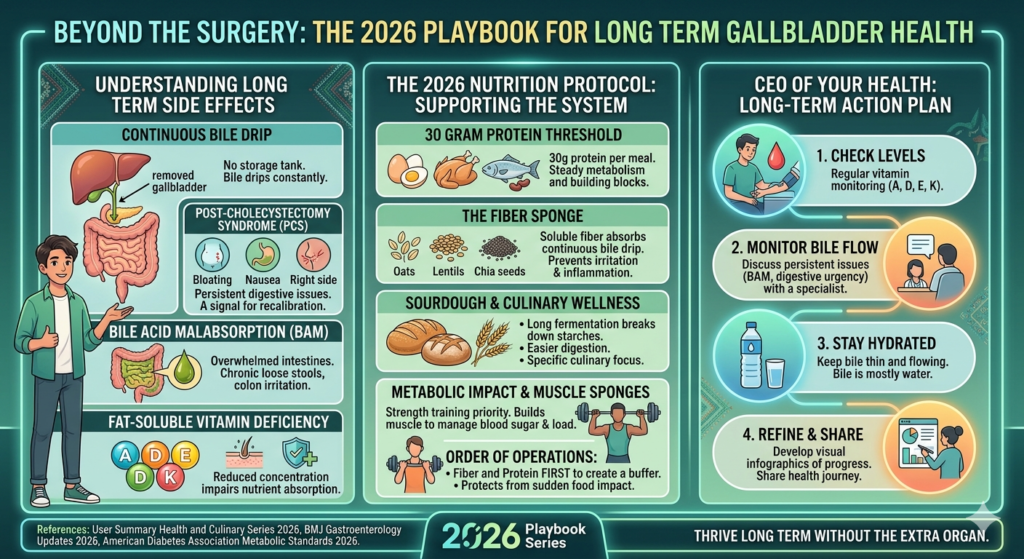
The biggest long term change is how bile enters your system. Your gallbladder used to be a storage tank that sprayed bile when you ate fat. Now your liver drips bile continuously into the small intestine regardless of whether you are eating or not. This change in plumbing leads to several long term effects that require consistent management.
1. Post Cholecystectomy Syndrome
This is a catch all term for the digestive issues that persist or develop months or years after surgery. It can involve bloating or nausea and right side pressure. In 2026 we recognize this as a sign that the digestive system needs recalibration rather than a permanent failure.
2. Bile Acid Malabsorption
Without a tank to hold the bile the intestines can become overwhelmed. This leads to digestive urgency or chronic loose stools. Over the long term this can irritate the lining of the colon. Managing this is a core part of the sustained interest in metabolic health strategies.
3. Fat Soluble Vitamin Deficiency
Bile is required to absorb vitamins A and D and E and K. Because bile is no longer concentrated you might find that your levels of these nutrients drop over the long term. This can impact everything from your skin health to your immune system.
The 2026 Nutrition Protocol: Supporting the System
To manage these side effects we focus on high protein nutrition and metabolic wellness.
- The 30 Gram Protein Threshold: Aiming for 30 grams of protein per meal helps keep your metabolism steady and ensures you are getting the building blocks you need despite digestive changes.
- The Fiber Sponge: Using soluble fiber like oats or lentils acts as a sponge for the continuous bile drip. This prevents the bile from irritating the gut and causing long term inflammation.
- Sourdough and Digestive Wellness: Incorporating specialized culinary techniques like sourdough baking can be helpful. The fermentation process makes the bread easier to digest which is vital when your bile flow is no longer optimal.
- The Glow Up Recipe Approach: Focus on updated versions of classic recipes that prioritize gut health while hitting your nutritional targets.
Metabolic Impact and Muscle Sponges
Your metabolic health is closely linked to how you digest fats and proteins.
- Muscle Sponges: Strength training remains a top priority. Building muscle helps your body manage blood sugar and overall metabolic load which can be stressed after organ removal.
- Order of Operations: Eat your fiber and protein first to create a buffer before consuming any fats or simple carbs. This protects your system from the sudden impact of food on a gallbladder less gut.
Long Term Action Plan
If you are living without a gallbladder you are the CEO of your health. You should monitor your data and listen to your body.
- Check Your Levels: Get regular blood work to monitor fat soluble vitamins.
- Monitor Bile Flow: If you have persistent issues discuss Bile Acid Malabsorption with a specialist.
- Stay Hydrated: Bile is mostly water. Keeping hydrated ensures that your bile stays thin and flows easily through the ducts.
- Refine Your Recipes: Continue developing visual infographics to track your progress and share your health journey.
Final Thoughts: Owning Your 2026 Health
Living without a gallbladder is a long term journey. It requires a pivot in how you think about nutrition and movement. By focusing on metabolic wellness and high protein targets you can thrive without that extra organ. You have the power to stay ahead of the side effects and live your best life in 2026.