So it finally happened. You and your gallbladder have officially broken up.
Maybe it was a long time coming after months of attacks or maybe it was a sudden medical emergency that left you waking up in a hospital bed wondering where your midsection went.
Either way you are now part of the No Gallbladder Club and honestly it is a pretty big club.
But once the initial relief of being surgery free wears off the panic usually sets in: What on earth am I supposed to eat now?
Being 22 and trying to navigate a restricted diet is its own kind of struggle.
You want to go out for drinks with friends grab a quick burger between classes or just enjoy a normal slice of pizza without feeling like your internal organs are staging a protest.
The good news is that you can eventually get back to a normal life.
The bad news? The first few weeks are a critical training period for your body.
Your liver is now dripping bile directly into your intestines like a leaky faucet instead of a high pressure hose.
Your digestive system needs time to figure out this new workflow.
Let us break down how to eat so you can recover fast and avoid the dreaded bathroom dash.
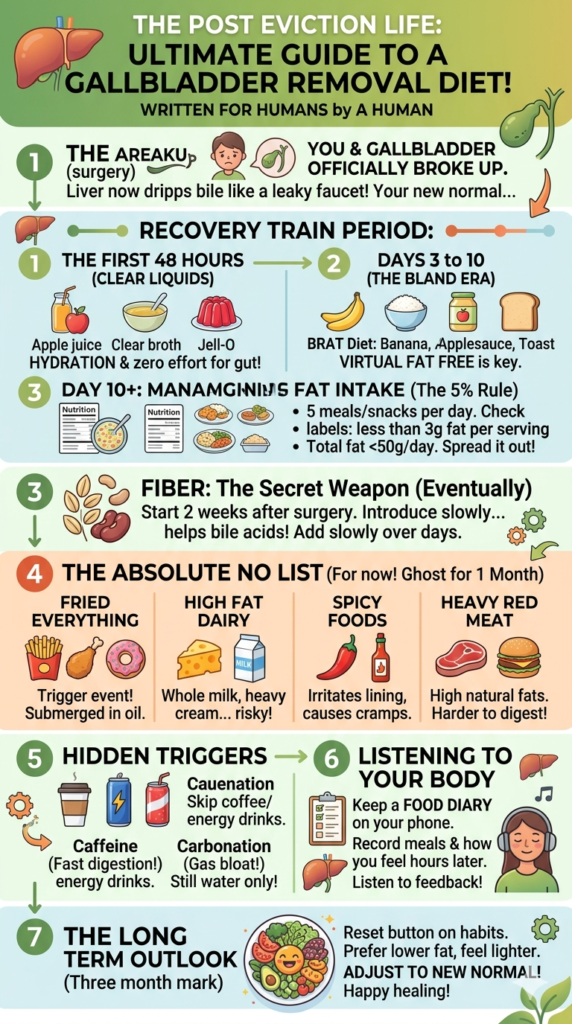
The First 48 Hours: Keeping It Liquid
When you first get home your body is still processing anesthesia and the trauma of surgery.
Your digestive system is basically in sleep mode.
For the first day or two your doctor will likely put you on a clear liquid diet.
We are talking apple juice white grape juice clear broth and maybe some Jell O if you want to feel fancy.
The goal here is simple: hydration and zero effort for your gut.
Avoid orange juice or anything citrusy as the acidity can be a bit much for a post op stomach.
If you can handle these without feeling nauseous or bloated you get to move up to the next level.
Days 3 to 10: The Bland and Boring Era
This is the phase where you start eating actual food again but you have to keep it very low key.
Think of your stomach like a newborn baby. You would not give a baby a spicy taco right?
Stick to the BRAT diet (Bananas Rice Applesauce Toast).
This is the low residue lifestyle we have talked about before.
White bread white rice and plain crackers are your best friends right now.
You want foods that are low in fiber and most importantly virtually fat free.
Since you do not have a gallbladder to store bile your body cannot handle a big dump of fat all at once.
If you eat a greasy meal right now the fat will just slide right through you leading to cramping and some very unpleasant emergency bathroom trips.
Steamed chicken breast with no skin boiled fish and plain potatoes with no butter are safe bets for protein.
The 5 Percent Rule: Managing Fat Intake
As you move out of the first week you can start introducing a tiny bit of fat but you have to be tactical about it.
A good rule of thumb is to check the labels on everything you eat.
Try to keep your fat intake to less than 3 grams per serving.
Most people find that they can handle about 30 to 50 grams of fat total for the entire day but you have to spread it out.
Instead of having one fatty meal have five or six tiny meals throughout the day.
This gives that constant drip of bile from your liver a chance to keep up with the workload.
If you try to eat a 20 gram fat meal in one sitting your liver just will not have enough bile ready to break it down and you will pay for it later.
Fiber: The Secret Weapon Eventually
In the beginning you want low fiber to keep things easy.
But as you reach the two week mark fiber actually becomes your secret weapon for long term health.
Soluble fiber like the kind in oats and barley helps to bind with the bile acids in your gut.
This can help prevent the bile acid diarrhea that some people struggle with for months after surgery.
However you have to introduce it very very slowly.
If you go from white toast to a giant bowl of beans overnight you are going to be incredibly bloated and gassy.
Add one small serving of high fiber food every few days and see how your body reacts.
If your stomach starts making weird noises or you feel tight back off and wait another week.
The Absolute No List For Now
I hate to be the one to tell you this but there are some things you just have to ghost for at least a month.
Fried Everything
French fries fried chicken donuts and anything that has been submerged in oil is a no go.
It is the fastest way to trigger a digestive event.
High Fat Dairy
Whole milk heavy cream and especially cheese are risky business.
If you need dairy stick to fat free yogurt or skim milk but even then proceed with caution.
Spicy Foods
Your digestive lining is extra sensitive right now.
Hot sauce jalapeños and heavy spices can cause irritation that leads to cramping.
Heavy Red Meat
Steak and burgers are high in natural fats that are much harder to digest than poultry or fish.
Wait until you are at least 4 to 6 weeks out before trying a small piece of steak.
Caffeine and Carbonation: The Hidden Triggers
Being 22 usually involves a significant amount of caffeine whether it is coffee to get through a morning lecture or an energy drink for a late shift.
But caffeine can actually speed up digestion.
In a post gallbladder world your digestion is already fast because of the constant bile flow.
Adding caffeine to the mix can lead to a double speed situation that your intestines just cannot handle.
Try to stick to decaf or herbal tea for the first couple of weeks.
Similarly carbonated drinks like soda or sparkling water can fill your stomach with gas making the post op bloating even worse.
Give your body a break and stick to plain still water for a while.
Listening to Your Bodys Feedback
The most important thing to remember is that everyone recovery is different.
Some people can eat a cheeseburger two weeks after surgery and feel fine (though I would not recommend it!).
Others have to be careful for six months.
Keep a food diary on your phone for the first few weeks.
Write down what you ate and how you felt a few hours later.
If you notice that every time you have peanut butter you get a stomach ache then peanut butter is off the list for now.
Your body is going to give you very clear signals you just have to be quiet enough to listen to them.
The Long Term Outlook
Do not worry you are not destined to eat boiled chicken and white rice for the rest of your life.
Most people find that by the three month mark they can eat almost anything they used to eat.
You might just find that you prefer a slightly lower fat diet because it makes you feel lighter and more energized.
Think of this surgery as a chance to hit the reset button on your eating habits.
You have survived the surgery the hospital and the eviction.
Now just give your body a little grace and a little time to adjust to its new normal.
You have got this! Be patient with your gut stay hydrated and remember that every day you are getting a little bit closer to that first real meal again.
Happy healing!