We have all heard it at least once. Maybe it was from a well-meaning friend at a party or a fitness influencer on your feed. Someone sees you holding a glass of wine or a beer and says, “You know that basically just turns into straight sugar the second you drink it, right?”
It sounds like one of those scientific facts that just makes sense. Alcohol comes from fermented grains or fruits, which are high in sugar. Therefore, alcohol must be liquid sugar. It feels logical. It feels right.
But here is the thing: it is actually 100% a myth.
If you are trying to stay on top of your metabolic health, managing your energy levels, or just curious about what is actually happening in your liver after a happy hour, you need the real story. The way your body processes a margarita is way more complicated (and interesting) than just “turning it into sugar.”
Let’s pull back the curtain on how alcohol actually interacts with your blood sugar and why the “liquid sugar” labels are totally misleading.
The Chemistry Lesson You Actually Care About
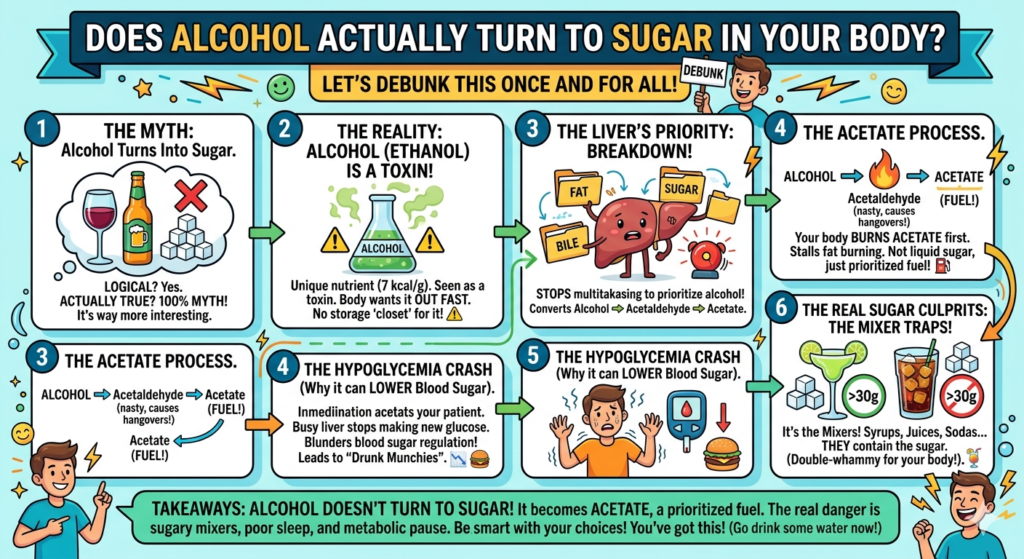
To understand why alcohol doesn’t turn into sugar, we have to look at what it actually is. Chemically speaking, alcohol (ethanol) is its own unique macronutrient. We have proteins, fats, carbs, and then we have alcohol.
Alcohol contains about 7 calories per gram. That is more than carbs and protein (4 calories per gram) but less than fat (9 calories per gram).
When you eat a carbohydrate, like a piece of bread or an apple, your body breaks it down into glucose (sugar). That glucose enters your bloodstream, your insulin kicks in, and you use that sugar for energy or store it for later.
Alcohol does not follow this path. Your body actually sees alcohol as a toxin. Because it is technically a poison, your body wants it out of your system as fast as possible. It doesn’t have a storage “closet” for alcohol like it does for sugar or fat.
So, instead of turning into sugar, alcohol gets the “VIP treatment” in your liver. Your liver stops everything else it is doing including burning fat and regulating blood sugar—to focus entirely on breaking down that alcohol.
The Liver’s Priority List
Think of your liver like a very busy personal assistant. Usually, it is multitasking: it is clearing out old cells, producing bile, and keeping your blood sugar stable by releasing stored glucose when you haven’t eaten in a while.
When alcohol shows up, the assistant drops all of those folders on the floor.
Your liver converts alcohol into something called acetaldehyde. This stuff is actually pretty nasty and is a big reason why you feel like a zombie during a hangover. Then, it quickly turns that into acetate.
Acetate is the final product. It doesn’t turn into sugar. Instead, your body burns acetate for energy before it burns anything else.
This is why people say alcohol “stalls” weight loss. It isn’t because the alcohol turned into sugar; it’s because your body is busy burning acetate instead of burning the fat you already have or the food you just ate.
The Hypoglycemia Paradox: Why Alcohol Can Actually Lower Your Blood Sugar
This is the part that really trips people up. If alcohol turned into sugar, you would expect your blood sugar levels to skyrocket every time you had a drink.
In reality, the opposite often happens.
Because your liver is so obsessed with processing the alcohol, it forgets its other job: gluconeogenesis. This is the fancy word for your liver creating new glucose to keep your blood sugar steady.
If you drink on an empty stomach or drink heavily, your liver stops releasing glucose into your blood. This can lead to a “crash” or hypoglycemia.
This is especially important for anyone keeping an eye on their A1C or metabolic health. If you are drinking and your blood sugar drops, you might feel shaky, dizzy, or incredibly hungry.
This is also why the “drunk munchies” are a real biological phenomenon. Your brain thinks you are starving because your blood sugar is dipping, so it sends out emergency signals for you to eat the greasiest, carb-heaviest food possible.
The Real Culprit: The “Mixer” Trap
Now, I know what you are thinking. “If alcohol doesn’t turn into sugar, then why does my favorite cocktail taste like a candy bar and make me feel like I’m on a sugar high?”
The answer isn’t the alcohol itself. It is everything else in the glass.
While pure spirits like vodka, gin, tequila, and whiskey have zero sugar, the things we mix them with are usually sugar bombs.
- Margaritas: Often loaded with agave nectar or sugary pre-made mixes.
- Rum and Coke: A single serving can have over 30 grams of actual sugar.
- Espresso Martinis: Usually packed with simple syrup and coffee liqueurs.
- Fruity Cocktails: Pineapple juice, orange juice, and grenadine are basically straight glucose.
When you drink a sugary cocktail, you are getting a double-whammy. Your liver is paralyzed by the alcohol, so it can’t manage the massive spike of sugar coming in from the mixer. This is the ultimate recipe for insulin resistance and metabolic chaos.
If you are worried about sugar, the alcohol isn’t the villain—the tonic water and the juice are.
What About Wine and Beer?
Wine and beer are a bit of a middle ground.
Beer contains maltose, which is a type of carbohydrate. While the alcohol in the beer doesn’t turn into sugar, the unfermented grains in the beer definitely count as carbs. This is where the “beer belly” comes from—it’s essentially a “liquid bread” belly.
Wine is made from grapes, and grapes are full of sugar. However, during the fermentation process, yeast eats that sugar and turns it into alcohol.
A “dry” wine has very little residual sugar left. A “sweet” dessert wine, on the other hand, has a lot of sugar that didn’t get fermented.
So, if you are choosing a drink based on sugar content, a dry red or white wine is a much better bet than a fruity craft beer or a cider.
The “Afterparty” Cravings and Your Metabolism
Even if you drink pure vodka and soda water (the “skinny” choice), you aren’t totally off the hook when it comes to sugar and focus.
Alcohol messes with your sleep quality. Even two drinks can prevent you from hitting that deep, restorative REM sleep. When you wake up after a night of drinking, your body is in a state of stress.
This stress triggers a rise in cortisol. High cortisol levels make you crave—you guessed it—sugar.
So, even though the alcohol didn’t turn into sugar in your veins, it created a hormonal environment that makes you want to eat an entire box of donuts the next morning. It is a indirect relationship, but it is just as powerful.
Long-term Metabolic Health and Alcohol
If you are looking at the big picture of your health, the biggest concern with alcohol isn’t the “sugar” myth. It is the impact on your liver’s health and your insulin sensitivity.
Chronic drinking can lead to a “fatty liver.” When the liver is constantly forced to process acetate, it starts to store fat within its own cells. A fatty liver is much less efficient at managing your blood sugar and responding to insulin.
This is why long-term heavy drinking is linked to metabolic issues. It isn’t because the alcohol is “turning into sugar” over years; it’s because the liver is becoming too damaged to regulate sugar correctly anymore.
How to Drink Without Trashing Your Energy and Focus
If you want to enjoy a drink without falling for the sugar trap or ruining your metabolic vibe, here is the “human-to-human” advice:
- Stick to the “Clean” Stuff: Tequila, vodka, or gin with soda water and a squeeze of fresh lime is the GOAT. It has zero sugar and won’t give you that massive insulin spike.
- Avoid the “Skinny” Scams: Sometimes “skinny” mixes use artificial sweeteners that can still mess with your gut health or trigger cravings. Fresh ingredients are always better.
- Eat a Solid Meal First: Remember the 30g protein rule? Having a high-protein, high-fiber meal before you drink will slow down the absorption of alcohol and protect your blood sugar from dipping too low.
- Hydrate Like Your Life Depends On It: One glass of water for every alcoholic drink. It sounds boring, but it helps your liver flush out those toxins and prevents the “hangover hunger” the next day.
- Watch the Timing: Try to finish your last drink at least three hours before you go to bed. This gives your liver a head start on the cleanup process so you can actually get some decent sleep.
The Bottom Line
Alcohol does not turn into sugar. It turns into acetate, a fuel source that your body prioritizes over fat and carbs.
The real danger to your focus and energy isn’t some magical chemical transformation of the alcohol; it’s the sugary mixers, the poor sleep, the “drunk munchies,” and the way alcohol puts your metabolism on pause.
Knowledge is power. Now that you know the truth, you can make better choices that don’t leave you feeling like a zoned-out zombie the next day.
Whether you are trying to manage your A1C, lose weight, or just stay sharp, understanding the “why” behind your body’s reactions is the ultimate hack.
Enjoy your life, stay mindful, and don’t let anyone tell you that your wine is just liquid sugar. It is much more complex than that!
If you found this helpful, definitely share it with that one friend who is always talking about “liquid sugar.” Let’s get everyone on the same page!
Keep focusing on those small habits. They add up to big changes. You’ve got this!