You have officially hit the twelve month mark. You did the surgery, survived the immediate recovery, and thought you were in the clear. But now, exactly a year later, your stomach is acting like it has a mind of its own. It feels like a software update gone wrong. I am 22 years old, and I know how frustrating it is when you are trying to build a healthy, high-performance life and your digestive system keeps throwing system failure notifications.
In 2026, we do not view gallbladder removal as a set it and forget it procedure. It is a fundamental shift in your metabolic architecture. This article is a core pillar of the 2026 Playbook series, designed to help you troubleshoot the one-year-post-op hump. If you are dealing with bloating, urgency, or that “heavy” stomach feeling, you are not failing—you just need a recalibration.
The Vibe Check: Why is the One Year Mark So Weird?
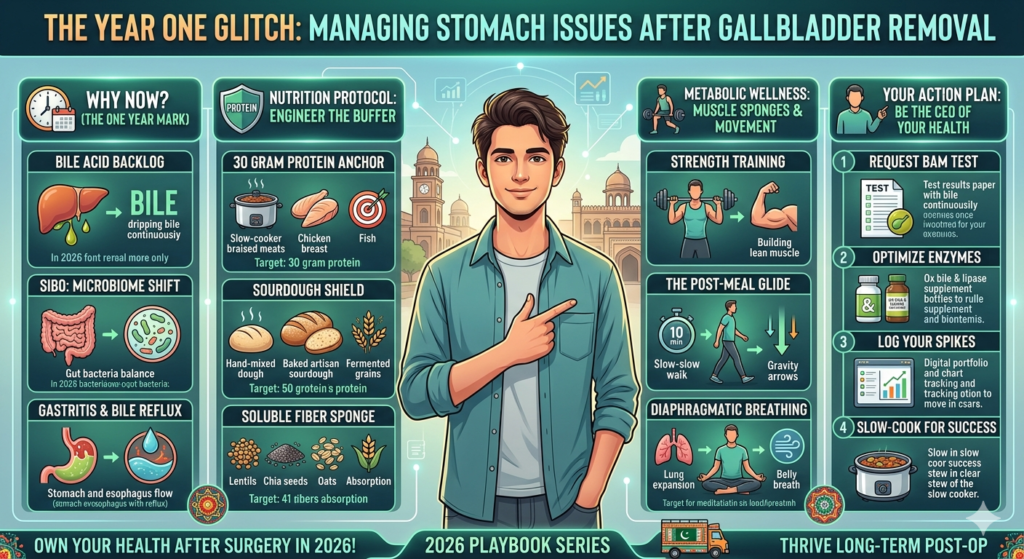
Why now? Why did you feel fine for six months and then start struggling? Your body is a master of compensation, but after a year, its “temporary fixes” for missing an organ can start to wear thin. Without the gallbladder to regulate bile, your internal plumbing has changed permanently.
1. The Bile Acid Backlog
Your liver is a continuous producer of bile. Without a storage tank, that bile is constantly entering your small intestine. Over time, if your diet and lifestyle haven’t adjusted to this “continuous drip,” the intestinal lining can become irritated. This results in the classic “one-year bloat” or sudden digestive urgency after meals.
2. SIBO: The Microbiome Shift
Bile is a powerful antimicrobial. When the flow of bile changes, the bacterial map of your gut changes with it. In 2026, we recognize that many “stomach issues” a year after surgery are actually cases of Small Intestinal Bacterial Overgrowth (SIBO). If bile is not hitting the right places at the right times, bacteria can migrate into the small intestine, leading to gas and pressure.
3. Gastritis and Bile Reflux
Sometimes, the bile does not just go down; it goes up. If your stomach valve is a bit relaxed, bile can reflux into the stomach. This irritates the stomach lining (gastritis), causing a dull ache or a persistent feeling of being “full” after only a few bites of food.
The 2026 Nutrition Protocol: Engineering the Buffer
To silence the one-year glitch, we focus on high-protein targets and specialized culinary buffers. We are not just eating; we are engineering a digestive environment.
1. The 30 Gram Protein Anchor
Hitting 30 grams of protein at every meal is your top priority. Protein is the most complex macronutrient to break down, which is actually a good thing in this case. It gives the continuous bile drip a job to do. When you eat high-quality protein think braised meats from a slow-cooker or lean poultry—you provide a stable environment that prevents bile from irritating the gut wall.
2. The Sourdough Shield
If you have a sustained interest in artisan baking, sourdough is your best friend in 2026. The long fermentation process breaks down the phytic acid and complex starches that can trigger bloating in a gallbladder-less system. A slice of well-fermented sourdough acts as a “buffer” for bile, soaking up excess acids and providing a gentle, pre-digested carbohydrate source.
3. Soluble Fiber: The Internal Sponge
Soluble fiber is the “clean-up crew.” Incorporating lentils, chia seeds, or oats into your routine is essential. Unlike insoluble fiber, which can be abrasive, soluble fiber turns into a gel that binds to excess bile and carries it out of the system smoothly. This reduces the “burning” sensation often reported a year after surgery.
Metabolic Wellness: Muscle Sponges and Movement
Your stomach issues are not just happening in your gut; they are tied to your overall metabolic health. In 2026, we use the “Muscle Sponge” theory to manage digestive load.
- Strength Training: Muscles are metabolic sinks. When you build lean muscle through strength training, your body becomes more efficient at processing nutrients and managing blood sugar. This reduces the overall inflammatory load on your digestive system.
- The Post-Meal Glide: Instead of sitting down after a meal, try a 10-minute slow walk. This uses gravity and light muscle contraction to encourage the stomach to empty faster, preventing the bile reflux that causes nausea and heaviness.
- Diaphragmatic Breathing: Tension in the midsection can physically restrict the bile ducts. Spend 5 minutes before and after meals practicing deep, belly-focused breaths to relax the Sphincter of Oddi and ensure smooth flow.
Your Action Plan: Be the CEO of Your Health
If you are a year out and struggling, it is time to look at the data. In 2026, we have the tools to be precise.
- Request a BAM Test: If you have persistent urgency, ask about Bile Acid Malabsorption. It is a common but often overlooked side effect that can be managed with simple bile binders.
- Optimize Your Enzymes: Standard enzymes might not be enough. Look for 2026-grade supplements that include TUDCA or ox bile to help emulsify fats more effectively in the absence of a gallbladder.
- Log Your Spikes: Use your digital portfolio to track which foods cause “spikes” in bloating or pain. Look for patterns—is it high-fat meals? Is it when you skip your protein target?
- Slow-Cook for Success: Use slow-cooker techniques to break down tough fibers in meats and vegetables. This “pre-digestion” takes the pressure off your system and reduces the chances of a mid-day stomach flare-up.
Final Thoughts: Fix the Glitch
Stomach issues a year after surgery are a prompt to upgrade your lifestyle. You have the knowledge and the tools to fix the glitch. By focusing on your 30 gram protein targets, utilizing the sourdough shield, and treating your muscles as metabolic sponges, you can reclaim your digestive health. You’ve done the hard part—now it’s just about fine-tuning the machine. You’ve got this