You did the surgery. You followed the protocol. You removed the organ and expected a clean slate. But now you are dealing with a lingering queasiness that feels like a constant glitch in your system. In 2026 we do not just accept nausea as a permanent side effect. We view it as a data point in your metabolic journey. I am 22 years old and I know how frustrating it is when your body throws error codes despite your best efforts to stay healthy.
This article is part of your 2026 Playbook series. As a content creator specializing in SEO optimized wellness articles you know that metabolic health is about precision. If you are feeling that familiar wave of nausea it is time to troubleshoot your digestion and reclaim your energy.
The Vibe Check: Why Do I Still Feel Nauseous?
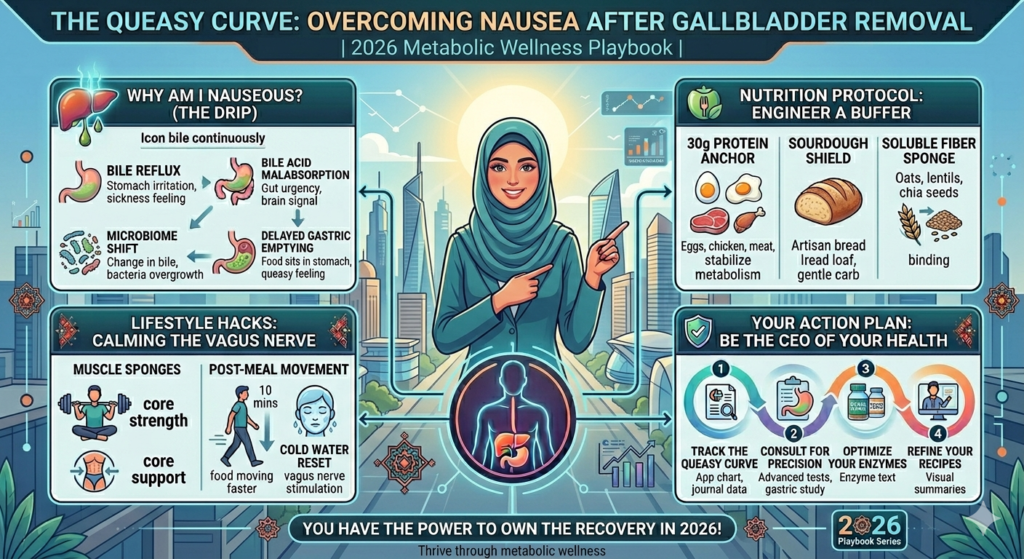
It has been a significant amount of time since your surgery. Why is the nausea hitting now? Without a gallbladder your liver is a continuous dripper of bile. This change in internal plumbing can lead to several specific 2026 identified issues:
- Bile Reflux: This is the big boss of post surgery nausea. Because bile is no longer stored it can back up into your stomach. This irritates the stomach lining and creates a persistent sick feeling that is different from standard acid reflux.
- Bile Acid Malabsorption: When too much bile hits the small intestine at once it causes irritation. This does not just cause urgency: it sends signals to the brain that something is wrong which manifests as nausea.
- The Microbiome Shift: Your bile flow impacts your gut bacteria. In 2026 we know that a change in bile can lead to an overgrowth of certain bacteria. This creates gas and pressure that pushes upward and makes you feel queasy.
- Delayed Gastric Emptying: Sometimes the digestive system slows down after losing the gallbladder. Food sits in the stomach longer than it should which is a recipe for constant nausea.
The 2026 Nutrition Protocol: Buffering the System
Since you are focused on nutrient density and digestive wellness your nutrition needs to adapt to the continuous bile drip. We are moving away from the old advice of just avoiding fat. Instead we are engineering a buffer.
1. The 30 Gram Protein Anchor
Hitting your target of 30 grams of protein per meal is essential. Protein acts as a digestive stabilizer. It requires more work for the body to break down which keeps the stomach occupied and helps neutralize excess bile. High protein meals provide the building blocks for your metabolic health while keeping the queasiness at bay.
2. The Sourdough Advantage
Your interest in artisan baking is a secret weapon. In 2026 sourdough is recognized as a functional food for gallbladder less digestion. The fermentation process breaks down gluten and antinutrients. This makes it a perfect gentle carbohydrate that can soak up excess bile without causing the blood sugar spikes that lead to more nausea.
3. Soluble Fiber as a Sponge
Soluble fiber is your best friend. Oats and lentils and chia seeds act like a literal sponge. They bind to the bile and carry it out of the system before it can irritate your stomach or colon. This is a core part of the metabolic wellness strategy for 2026.
Lifestyle Hacks: Managing the Vagus Nerve
Your digestive system is connected to your brain via the vagus nerve. If you are stressed the nausea will worsen. In 2026 we use metabolic wellness techniques to calm the system.
- Muscle Sponges: Strength training is a top priority. Building muscle helps your body manage metabolic load. When your muscles are active they act as a sink for blood sugar and energy which takes the pressure off your digestive system.
- Post Meal Movement: A 10 minute slow walk after eating is a non negotiable. It uses gravity and muscle contraction to help move food out of the stomach faster. This reduces the time bile has to reflux upward.
- The Cold Water Reset: If a wave of nausea hits try splashing cold water on your face or holding an ice cube. This stimulates the vagus nerve and can help reset the digestive signals.
Your 2026 Action Plan: Be the CEO of Your Health
You are a content creator who values clear visual summaries and data. Use that same approach for your body.
- Track the Queasy Curve: Use an app or journal to see when the nausea hits. Is it after a fat bomb? Is it when you skip a meal? Data is power.
- Consult for Precision: In 2026 we have advanced tests for bile reflux. If the nausea is persistent ask for a gastric emptying study or a test for bile acid malabsorption.
- Optimize Your Enzymes: Consider high quality digestive enzymes that include ox bile or lipase. This helps your body do the job your gallbladder used to do.
- Refine Your Recipes: Continue creating infographics and articles that document what works for you. Sharing your journey helps you stay accountable and helps others in the 2026 wellness community.
Final Thoughts: Own the Pivot
Nausea after gallbladder removal is not a mystery: it is a signal. It is your body asking for a pivot in how you manage your nutrition and movement. By hitting your 30 gram protein targets and utilizing the sourdough shield you can silence the queasiness. You have already done the hard work of surgery. Now it is time to fine tune the machine. You have got this