So, you just got your blood work back, and that Hemoglobin A1c number is staring at you like a pop quiz you weren’t ready for. I’m 22, and I totally get it medical numbers can feel like a grade on how well you’re “adulting,” and a high A1C feels like a straight-up “F.” But here’s the vibe check: your A1C is just a data point, not a destiny. It’s a three-month average of your blood sugar, and in 2026, we have the ultimate cheat code to bring it down naturally, without adding a single prescription pill to your routine.
We are officially in the era of “Person-First” health. Gone are the days of doctors just wagging a finger at you to “eat less sugar.” We’re moving toward a smarter, more personalized way of living that actually fits into a busy 2026 lifestyle. Whether you’re dealing with prediabetes or just want to optimize your metabolic health, this is how you take control and lower that number completely naturally.
The 2026 Shift: It’s All About “Time In Range”
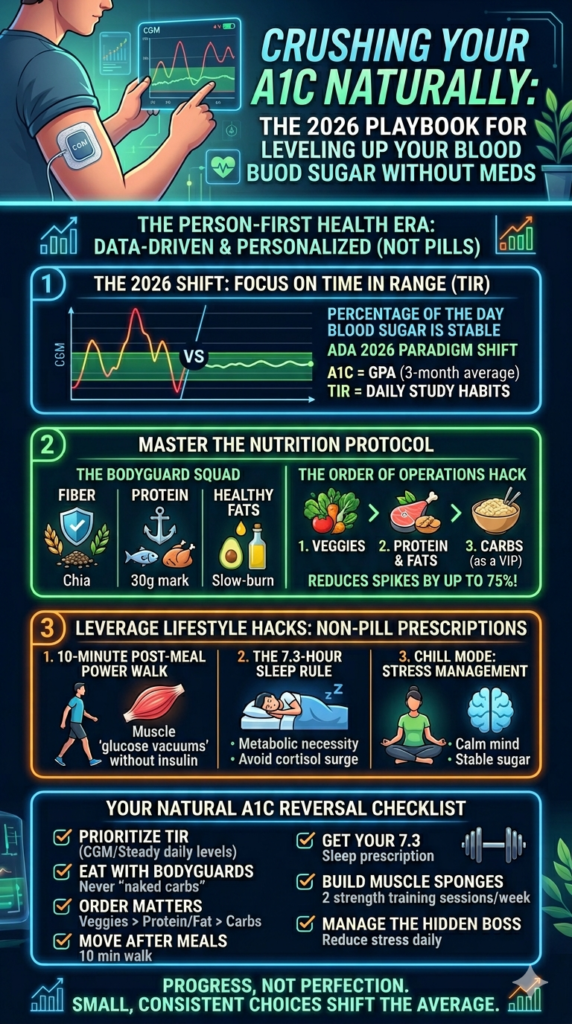
In the past, everyone obsessed over the A1C alone. But the 2026 American Diabetes Association (ADA) Standards of Care have introduced a major paradigm shift. We are now focusing on Time In Range (TIR)—the percentage of the day your blood sugar stays in a healthy zone.
Think of your A1C like your GPA, but your “Time In Range” is your daily study habit. If you fix the daily habits, the GPA takes care of itself. When you focus on naturally flattening your glucose curve throughout the day, the three-month average automatically follows suit.
This approach is empowering because it gives you immediate, daily feedback on how your choices are impacting your body. If you use a Continuous Glucose Monitor (CGM), which has become common tech in 2026, you can see that a morning smoothie might spike you, but a balanced omelet keeps you steady. Data is power.
The Nutrition Protocol: The Bodyguard Squad
If you want to lower your A1C, you have to stop the “sugar spikes.” Every time your blood sugar skyrockets, it sticks to your hemoglobin (that’s what the A1C measures). To stop the spikes, you need the Bodyguard Squad:
- Fiber: The ultimate shield. It slows down sugar absorption so you don’t get that massive spike. Aim for lentils, chia seeds, and leafy greens.
- Protein: The anchor. Protein keeps you full and stabilized. We’re talking about hitting that 30g mark per meal to keep your metabolism humming.
- Healthy Fats: The slow-burn fuel. Avocados and olive oil ensure you have steady energy instead of a sugar-fueled roller coaster.
The “Order of Operations” Hack
One of the easiest, non-medication ways to lower the glycemic impact of a meal is the order in which you eat. When you eat in this specific sequence, you can reduce the post-meal glucose spike by up to 75% without changing what you eat.
- Veggies first (Fiber bodyguard)
- Protein and Fats second (Satiety bodyguards)
- Carbs last (The VIP being guarded)
Lifestyle Hacks: The Non-Pill Prescriptions
Lowering your A1C naturally is about more than just your plate; it’s about how you utilize your body and manage your stress. These are your true natural remedies.
The 10-Minute Post-Meal Power Walk
This is the single most underrated natural tool in your kit. Walking for just 10 to 15 minutes immediately after you eat tells your muscles to start vacuuming up the glucose in your blood for energy. Your muscles have the ability to absorb sugar without needing insulin (it’s a separate “doorway”). It’s like a natural “undo” button for a high-carb meal.
The 7.3-Hour Sleep Rule
In 2026, we’ve learned that sleep is a metabolic necessity. Research shows that 7.3 hours is the sweet spot for glucose disposal. If you’re consistently undersleeping, your body stays in a “stress state,” pumping out cortisol and growth hormone that raise your blood sugar, making you insulin resistant even if you didn’t eat a single donut.
Chill Mode as a Medical Intervention
Stress is not just in your head; it is metabolic poison. When you are stressed, your “fight or flight” system (cortisol) kicks in, telling your liver to dump stored sugar into your blood to prepare for a physical emergency. Managing stress through meditation, deep breathing, or just laughing with friends is a direct, medication-free way to keep your blood sugar low.
Your Natural A1C Reversal Checklist
- Prioritize “Time In Range”: Use a CGM (like the woman in image_14.png) to focus on steady daily levels.
- Eat with the Bodyguards: Never eat a “naked carb”—always dress it with fiber, protein, or fat.
- Order Matters: Eat your food in the sequence: Veggies > Protein/Fat > Carbs.
- Move After You Eat: A 10-minute walk after every major meal is non-negotiable.
- Get Your 7.3: Treat sleep like a natural prescription for metabolic health.
- Build Muscle Sponges: Incorporate two strength training sessions a week (as shown in image_14.png) to create more functional muscle to soak up glucose.
- Manage the Hidden Boss: Actively manage stress daily.
Final Thoughts: Progress, Not Perfection
Lowering your A1C without medication isn’t about being “perfect” for 90 days straight. It’s about making enough small, smart, consistent choices that the average starts to shift in your favor. In 2026, we have the data and the lifestyle hacks to make this purely natural approach highly effective. You have the main character energy to take charge of these numbers. Stay consistent, stay hydrated, and remember: you’ve got this.