
If you are reading this, chances are your doctor or a nutritionist just dropped the phrase “low residue diet” on you, and you are currently staring at a screen wondering what on earth “residue” is supposed to mean in the context of your lunch.
When I first heard the term, I honestly thought of the stuff left over in a coffee filter or maybe the gunk at the bottom of a sink. It doesn’t exactly sound like something you want to build a lifestyle around.
But if your gut is going through a rough patch, whether it is a flare-up from Crohn’s or Colitis, or maybe you are prepping for a medical procedure, this diet is basically a big, warm hug for your digestive system.
It is a way of eating that gives your intestines a much-needed vacation. We are going to break down exactly what this means, why people do it, and how you can actually survive it without losing your mind.
So, What Actually Is “Residue”?
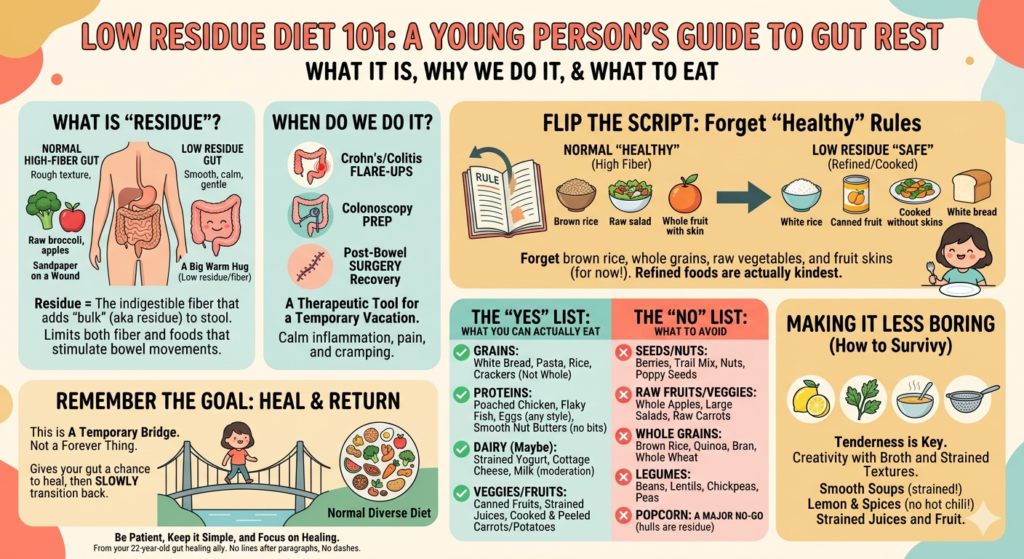
In the world of digestion, residue is just a fancy word for the stuff that your body cannot fully digest and absorb.
Think about it like this: most of the food we eat gets broken down in the stomach and small intestine, but certain parts of food, specifically fiber, just keep on cruising through until they reach the exit.
Fiber is great for a healthy, happy gut under normal circumstances, but it adds “bulk” or “residue” to your stool. If your intestines are inflamed, narrowed, or healing from surgery, that extra bulk is the last thing you want. It is like trying to shove a giant box through a narrow hallway.
A low residue diet is essentially a low-fiber diet, but it goes one step further. It also limits certain foods that might stimulate bowel movements, like dairy for some people or very tough meats. The goal is to have as little “leftover” material as possible passing through your system.
Why Would Someone Do This?
Most people don’t choose a low residue diet because they want to. It is usually a therapeutic tool.
If you have Inflammatory Bowel Disease (IBD) like Crohn’s disease or Ulcerative Colitis, there are times when your gut gets super inflamed. In those moments, eating a big bowl of kale or a handful of almonds feels like rubbing sandpaper on a wound. A low residue diet reduces the work your gut has to do, which can help calm down pain and cramping.
It is also the gold standard for “prep” situations. If you have a colonoscopy coming up, your doctor needs your colon to be as clean as possible so they can see what is going on. Eating low residue in the days leading up to it makes the final “clean out” much easier.
Lastly, it is often used after bowel surgery. When your insides have been through a literal war zone, you want to give them the easiest, softest things to process while they knit themselves back together.
The Weirdest Part: Forget Everything You Know About “Healthy” Food
This is the hardest part for most of us to wrap our heads around. Since we were kids, we have been told that white bread is bad, brown rice is good, and you should always eat the skin on your apple.
On a low residue diet, all those rules get flipped upside down.
For a little while, white bread is your best friend. White rice is a hero. That peeled, mushy canned peach? That is your new favorite snack.
It feels totally wrong to skip the salad and reach for the refined carbs, but in this specific context, those “unhealthy” refined foods are actually the kindest thing you can do for your body. They break down almost completely, leaving very little residue behind.
The “Yes” List: What You Can Actually Eat
It can feel restrictive at first, but there is actually a lot you can work with. You just have to change your perspective on textures.
For grains, you want to stick to the refined stuff. White bread, white pasta, white rice, and plain crackers are all great. If it has the word “whole” or “multigrain” on the package, put it back on the shelf for now.
When it comes to protein, tenderness is key. Think poached chicken, flaky fish, eggs (any way you like them), and smooth nut butters like creamy peanut butter. Just make sure there are no “crunchy” bits or seeds involved.
Dairy is a bit of a “maybe.” Some people on a low residue diet handle milk, yogurt, and cheese just fine. Others find that dairy makes their gut more active. If you do eat dairy, keep it in moderation. Smooth yogurts without fruit pieces and cottage cheese are usually safe bets.
For veggies and fruits, you have to be a bit of a chef. You can eat them, but they must be well-cooked and skinless. Think boiled carrots, peeled potatoes (no skins!), and canned fruits that aren’t packed in heavy syrup.
The “No” List: What to Avoid
This is where the fiber-heavy hitters live.
You want to avoid anything raw. Raw vegetables, raw fruits (especially those with skins like apples or grapes), and large salads are off the table.
Seeds and nuts are big offenders. Even those tiny seeds on a strawberry or a poppy seed bagel can cause irritation. Popcorn is also a major no-go because those hulls are basically pure residue.
Whole grains are out. That means no brown rice, no quinoa, no buckwheat, and no bran.
Legumes like beans, lentils, and chickpeas are very high in fiber and can also cause gas, which makes bloating and pain worse. Even though they are “healthy” proteins, they are too much work for a gut that needs a break.
How to Make It Less Boring
I am not going to lie to you, eating white toast and boiled chicken can get old pretty fast. But you can still use flavor to make things interesting.
Spices are generally okay as long as they aren’t “hot” spices like chili flakes or cayenne that might irritate your lining. Salt, pepper, lemon juice, and soy sauce can go a long way.
Focus on textures. A smooth potato leek soup (strained to remove any bits) feels much more like a “real meal” than just a plain piece of white bread.
You can also get creative with how you cook. Instead of just boiling everything, try poaching your fish in a little bit of broth with herbs. The herbs will flavor the food, and you can just remove the sprigs before you eat.
The Mental Side of Restrictive Eating
Dealing with any kind of restrictive diet is mentally draining. It is hard to go out to dinner with friends when the only thing on the menu you can eat is a side of plain white rice.
It is important to remember that for most people, a low residue diet is a temporary bridge. It is a tool to get you from a place of pain to a place of healing.
Don’t look at it as a “forever” thing. Look at it as a medical intervention that just happens to involve your grocery list. If you feel frustrated, remind yourself that you are giving your body the space it needs to repair itself so that one day, you can eat that giant salad again.
Transitioning Back to “Normal” Eating
When you start feeling better, the temptation is to celebrate with a big bowl of broccoli or a bag of almonds. Please, for the sake of your gut, don’t do that.
Coming off a low residue diet should be a slow, gradual process. Your gut has been on a “vacation,” and its ability to process fiber might be a little rusty.
Start by adding one small serving of a “medium” fiber food back in. Maybe try half a sweet potato without the skin, or a small serving of well-cooked oatmeal. See how your body reacts for 24 hours. If everything is cool, you can slowly keep adding more variety.
This “test and see” method is the best way to make sure you don’t trigger another flare-up by overwhelming your system too fast.
Final Thoughts
A low residue diet isn’t about being trendy or losing weight. It is about being kind to your digestive system when it is at its most vulnerable.
It might feel weird to peel your grapes and eat white bread like it is 1995, but if it stops the pain and helps you heal, it is worth it.
Be patient with yourself, keep your meals simple, and remember to stay hydrated. Water is always low residue!
You are doing the work to get healthy, and that is something to be proud of, even if your dinner looks a little bit beige for a while. You’ve got this.