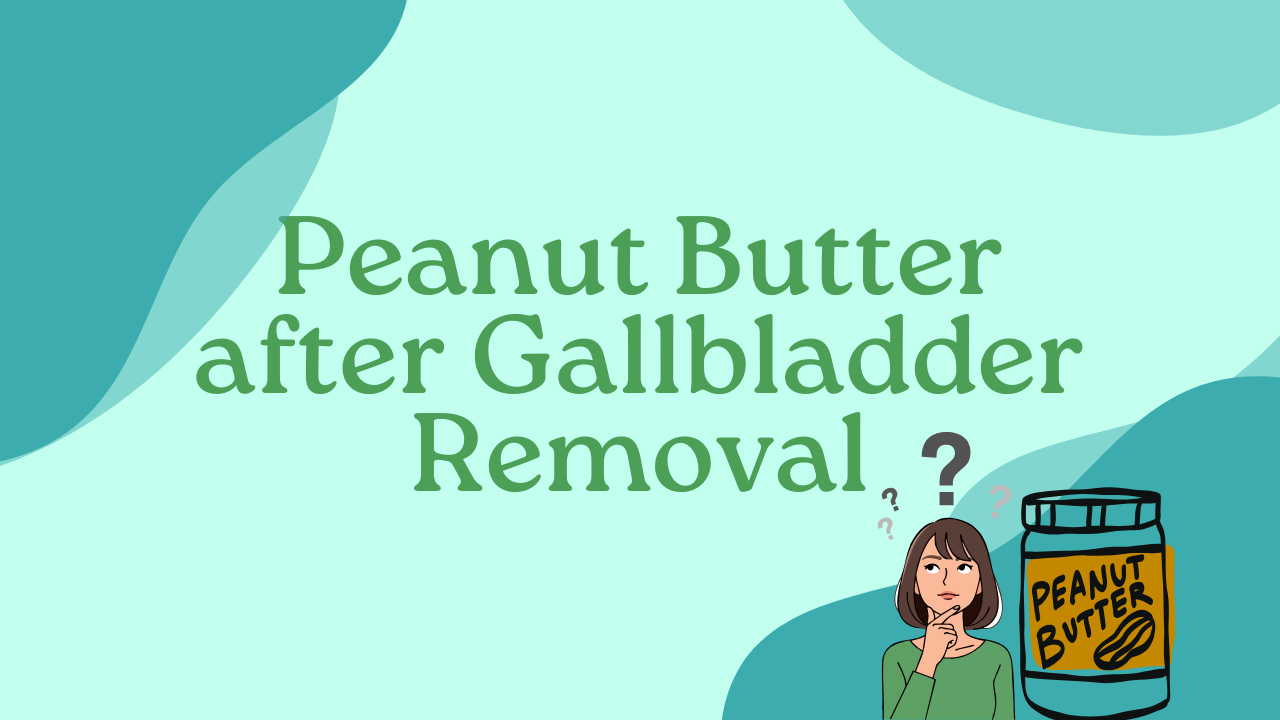
One day you’re living your life and eating whatever you want, and the next, you’re staring at a jar of Jif like it’s a ticking time bomb.
If you’re anything like me, peanut butter isn’t just a snack. It is a literal lifestyle. It’s the midnight snack, the protein boost, and the only thing that makes a boring apple worth eating. But now that your gallbladder is sitting in a biohazard bin somewhere, the rules of the game have changed.
The big question on everyone’s mind after they get home from the hospital is: Is peanut butter a friend or a foe post-op?
Let’s get into the greasy, nutty details of how to navigate your PB cravings without ending up curled in a ball on the bathroom floor.
Why Your Body is Throwing a Tantrum Right Now
First off, let’s talk about what actually happened during your cholecystectomy (that’s the fancy name for the surgery). Your gallbladder was basically a storage unit for bile. Bile is that green liquid your liver makes to break down fats.
Back in the day, when you ate a massive spoonful of peanut butter, your gallbladder would see that fat coming and squeeze out a concentrated “bile bomb” to dissolve it. It was a very efficient system.
Now? Your liver just drips bile into your small intestine like a leaky faucet. There’s no “reserve” for when you eat something high-fat. So, when you drop a fat-heavy food like peanut butter into your system, your body might freak out because it doesn’t have enough bile ready to handle the load all at once.
The result is usually bloating, “the runs” (let’s be real, we’re all thinking it), and some pretty gnarly cramping. It’s basically your digestive system saying it can’t keep up with the work.
The Verdict: Is Peanut Butter Off the Table?
The short answer is no, but it’s complicated.
The long answer is that you don’t have to break up with peanut butter forever, but you definitely need to put the relationship on “long-distance” for a while.
Most doctors and surgeons will tell you to stick to a low-fat diet for at least the first four to six weeks after surgery. Since peanut butter is about 70 to 80 percent fat, it’s definitely not on the “safe list” for those first few days of recovery when you’re mostly living on broth, Jell-O, and saltine crackers.
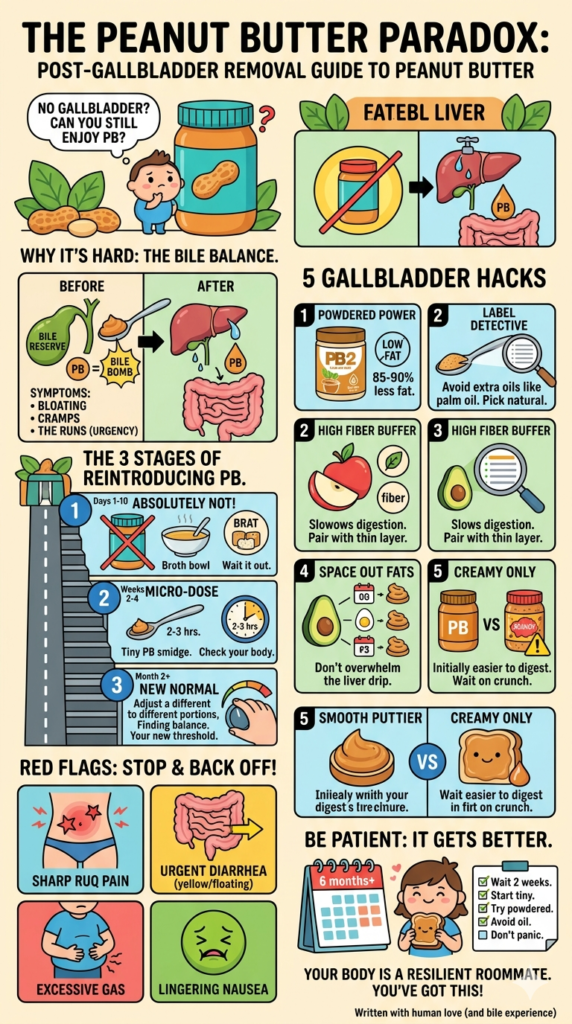
The 3 Stages of Reintroducing the Nutty Goodness
You can’t just go from zero to a double-decker PB&J sandwich overnight. You have to play the long game. Here is how I would recommend doing it based on the typical recovery timeline.
Stage 1: The “Absolutely Not” Phase (Days 1 to 10)
Right after surgery, your digestive system is essentially in shock. Even the smell of peanut butter might make you feel a bit queasy. Your body is busy healing incisions and figuring out how to digest literally anything without its storage unit.
Stick to the BRAT diet (Bananas, Rice, Applesauce, Toast). Don’t even think about the peanut butter jar this week. It is just not worth the risk of a “digestive emergency” while you’re still sore from surgery.
Stage 2: The “Micro-Dose” Phase (Weeks 2 to 4)
Once you’re feeling more human and your incisions are starting to heal, you can start testing the waters. This is the “science experiment” phase of your life.
We aren’t talking a tablespoon here. We’re talking a tiny teaspoon. Spread a very thin layer on a piece of dry toast. If you don’t feel like you’ve been kicked in the stomach after two or three hours, you’re heading in the right direction.
If you do feel bloated or sick? That’s okay. It just means your liver isn’t ready for that level of fat yet. Back off and try again in another week.
Stage 3: The “New Normal” (Month 2 and Beyond)
This is where you figure out your personal “fat threshold.” Some lucky people can go back to eating peanut butter like nothing ever happened. Others find that more than a tablespoon sends them straight to the bathroom.
You’ll start to learn exactly how much your “leaky faucet” liver can handle at once.
How to Eat PB Without the Pain: 5 Life Hacks
If you’re desperate for that nutty flavor but your body says “no thanks” to the oil, try these workarounds. These are the real game-changers.
1. The Powdered Magic (PB2 or PBfit)
This was a literal lifesaver for me. Powdered peanut butter has about 85 to 90 percent of the fat removed. You just mix the powder with a little water or almond milk. It satisfies the craving and gives you the protein without the “fat bomb” effect on your intestines. It’s the ultimate gallbladder-friendly hack.
2. Watch the Ingredients Like a Hawk
Check your labels. A lot of commercial peanut butters add extra oils like palm oil or hydrogenated vegetable oil to make them super creamy and prevent separation. Your body does not need extra processed fat right now.
Look for the “natural” kind where the only ingredients are peanuts and maybe a little salt. The less “extra” stuff your liver has to deal with, the better.
3. Pair it With Fiber
Don’t eat peanut butter off a spoon by itself. The fat hits your system way faster that way and can overwhelm your bile supply.
Instead, spread a thin layer on a high-fiber cracker or a piece of whole-grain toast. The fiber helps slow down digestion and can act as a buffer, making it easier for that constant drip of bile to keep up with the fat.
4. Space Your Fats Out
Don’t have peanut butter, avocado, and fried chicken in the same day. Your liver can only produce so much bile at a steady rate. If you’re going to have a little PB in the morning, keep the rest of your meals for the day super lean. Think grilled chicken, steamed veggies, and plenty of water.
5. The “No-Chunky” Rule (For Now)
Some people find that smooth peanut butter is easier to digest initially than the crunchy kind. The little bits of peanuts in the crunchy version are harder for your gut to break down, especially when your bile is limited. Stick to creamy until you know you’re in the clear.
Red Flags: When to Put the Jar Down
Listen to your body. It is literally screaming at you for a reason. If you eat peanut butter and experience any of these, you need to back off for a few more weeks.
Sharp pain in your upper right abdomen where your gallbladder used to be. This can sometimes be a “phantom pain” or just your bile duct getting irritated.
Urgent trips to the bathroom immediately after eating. If it’s bright yellow or floating, that’s a sign your body didn’t digest the fat at all.
Excessive gas or bloating that makes you feel like a parade float.
Nausea that lingers for hours after your snack.
If these symptoms are severe or you start running a fever, always call your surgeon. Sometimes a little stone can get stuck in the common bile duct, and it’s better to be safe than sorry.
The Science for Humans: Why Is This Happening?
It feels unfair, right? You see people on TikTok eating cheeseburgers three weeks after surgery and you’re struggling with a single nut.
Everyone’s “bile compensation” is different. Your liver eventually learns to adjust the flow of bile to match your eating habits, but it is not a fast learner. Think of your liver as a trainee who’s trying to do two jobs at once. It takes time to get the rhythm right.
Post-Cholecystectomy Syndrome is a fancy way of saying “my stomach hurts after surgery,” and it affects about 10 to 15 percent of people. For most, it goes away within a few months. For a few, it means a permanent shift to a lower-fat lifestyle.
Either way, your body is doing its best.
A Note on Other Nut Butters
You might be wondering if almond butter or cashew butter is safer than the classic peanut.
Honestly? Not really. They all have very similar fat profiles. In fact, almond butter can sometimes be even higher in fiber, which might actually help some people, but the fat content is still the main boss you have to defeat.
Don’t assume switching nuts will solve the problem. Treat them all with the same level of caution as you would a jar of Jif.
The Emotional Side: Dealing With Food FOMO
It’s hard when you’re 22 and your friends want to go out for wings or pizza and you’re stuck wondering if the peanut butter on your morning toast is going to ruin your night.
Food anxiety after gallbladder surgery is real. You start to view food as a potential source of pain rather than fuel or fun. Just remember that this “restricted” phase is temporary. Most people return to a totally normal, unrestricted diet within six months to a year.
Your body is incredibly resilient. It is relearning how to process food. Be patient with it. Treat your digestive system like a roommate who’s going through a tough breakup. Be kind, give it space, and don’t force it to do too much too soon.
Final Summary Checklist for PB Lovers:
Wait at least two weeks before trying even a tiny bit of the real stuff.
Start with powdered peanut butter to see how you handle the protein and flavor first.
Keep portions tiny. Think teaspoon size, not the “giant glob on a spoon” size.
Avoid “No-Stir” brands that have added oils and sugars.
Don’t panic if you have a bad reaction once. It doesn’t mean you’re allergic or broken; it just means you’re not ready yet. Wait another week and try again.
You’ve got this. The peanut butter shakes, the PB&Js, and the Reese’s cups aren’t gone from your life forever. They are just on a little hiatus while you heal up and your liver learns its new job.
Stay hydrated, stay patient, and maybe keep a bottle of ginger tea or Pepto-Bismol handy just in case things get rocky.
Disclaimer: I’m a writer sharing an experience-based guide, not a doctor. This is based on general recovery trends and common medical advice for post-op patients. Always check with your actual surgeon or a registered dietitian before making big changes to your diet while you’re healing!