So, you finally did it. You had the surgery, you survived the hospital gown that never actually stays closed, and now you are back home. But as you are sitting on your couch trying to figure out what to eat, everything feels like a massive risk.
If you just had your gallbladder removed (shoutout to the cholecystectomy crew), your relationship with food just got a whole lot more complicated.
When you are 22, you expect your body to just bounce back instantly. You want to be back to eating tacos and hanging out with friends, but instead, you are staring at your kitchen like it’s a minefield.
One of the most common questions that pops up during this “What on earth can I eat?” phase is about fruit. Specifically, the humble banana.
Is it safe? Will it make you feel like your stomach is doing backflips? Or is it the secret weapon for a smooth recovery?
Let’s break down exactly why bananas are probably about to become your new best friend and how to navigate the weird world of eating after your gallbladder has left the building.
Life Without a Gallbladder: The 101 Version
Before we talk about the fruit, we have to talk about what just happened inside you.
Your gallbladder was basically a storage unit for bile. Bile is the stuff your liver makes to help you break down fats. Before surgery, whenever you ate something greasy, your gallbladder would squeeze out a bunch of bile to handle the situation.
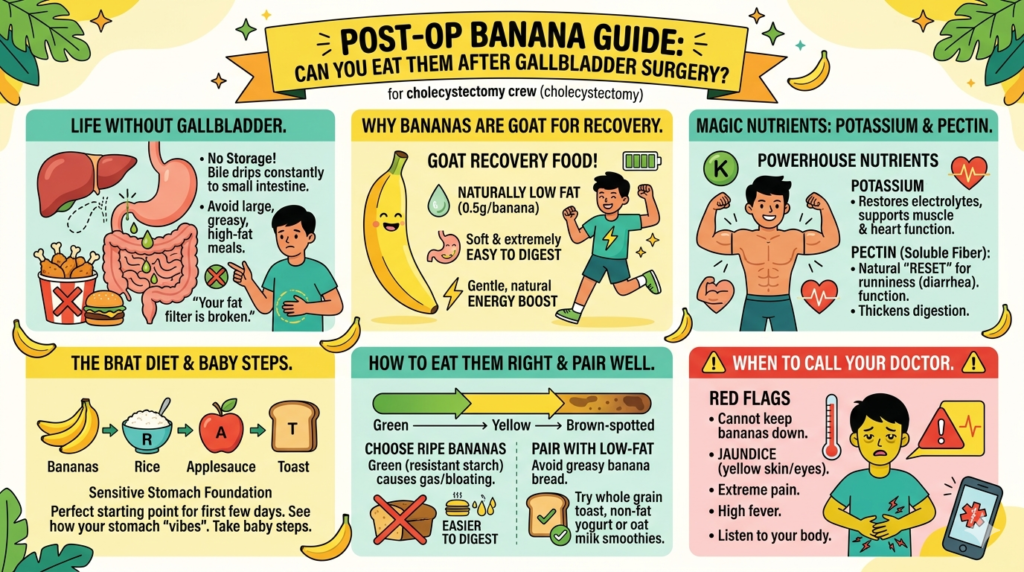
Now that the storage unit is gone, your liver is just constantly dripping bile directly into your small intestine.
Because there is no “backup” supply of bile anymore, your body struggles to handle large amounts of fat all at once. This is why everyone tells you to avoid fried chicken and heavy cheeseburgers for a while.
If you overwhelm your system with fat right now, it basically just “runs through” you, which leads to some very urgent trips to the bathroom and a lot of cramping.
Why Bananas are the GOAT of Recovery Foods
When it comes to the “Can I eat bananas?” question, the answer is a resounding YES. In fact, bananas are basically the gold standard for post-op recovery.
First of all, they are naturally low in fat. This is the most important thing during the first few weeks after surgery. Your digestive system is currently learning how to function in a new way, and bananas give it a break.
Second, they are incredibly easy to digest. They are soft, they don’t require much work from your stomach, and they are packed with nutrients that help your body heal.
If you are feeling weak or shaky after surgery, the natural sugars in a banana give you a gentle energy boost without the “crash” you get from processed snacks or sugary drinks.
The Magic of Potassium and Pectin
Bananas aren’t just easy to eat; they are actually doing some heavy lifting for your recovery.
After any surgery, your electrolyte levels can get a bit wonky. Potassium is a major player in keeping your muscles working and your heart rhythm steady. Bananas are famous for being a potassium powerhouse, which is exactly what you need when you are trying to regain your strength.
Then there is pectin. Pectin is a type of soluble fiber found in bananas.
For people who just had gallbladder surgery, pectin is a literal game changer. It helps thicken things up in your digestive tract.
Since a common side effect of gallbladder removal is “runny” digestion (let’s be real, we’re talking about diarrhea), the pectin in bananas can help bring some much needed order back to your bathroom routine. It’s like a natural “reset” button for your gut.
Understanding the BRAT Diet
If you spent any time Googling your recovery, you probably saw the term BRAT diet. This stands for Bananas, Rice, Applesauce, and Toast.
This is the classic “I have a sensitive stomach” meal plan.
While you don’t want to stay on this diet forever because it lacks protein and some key vitamins, it is a perfect starting point for the first few days after you get home.
Bananas are the “B” for a reason. They provide that solid foundation that allows your system to calm down. If you can handle a banana, you can usually start adding in some plain rice or a piece of dry toast.
It’s all about taking baby steps. Don’t try to be a hero and eat a full meal on day two. Start with the banana and see how the “vibe” is in your stomach first.
How to Eat Your Bananas (Yes, There is a Right Way)
This might sound extra, but the ripeness of the banana actually matters.
If you eat a banana that is still a bit green, it has more “resistant starch.” This can actually cause a bit of gas or bloating in some people.
When you are recovering from surgery, you already have enough gas and bloating to deal with from the procedure itself. You don’t need the fruit adding to it.
Try to go for a banana that is perfectly yellow or even has a few brown spots. These are the easiest to digest because the starches have already started breaking down into simple sugars.
If you are tired of just peeling and eating them, you can get creative. Try mashing a banana and putting it on a piece of whole grain toast, or blend it into a simple smoothie with some non-fat yogurt or an oat milk. Just make sure you are staying away from full-fat dairy, as that could trigger the very issues you are trying to avoid.
The “Fat Filter” for Your Whole Diet
While bananas are safe, you have to look at the “friends” you are pairing them with.
If you decide to make banana bread, but that bread is loaded with butter and oil, the banana isn’t going to save you. The fat content in the bread will likely cause a flare up.
When you are in your 20s, it is so tempting to just grab whatever is in the pantry, but you have to be your own gatekeeper right now.
Think of your digestion as having a “fat filter” that is currently broken. You have to manually check everything you eat.
Low-fat turkey, egg whites, steamed veggies, and plenty of fruit (like our friend the banana) should be your main squad for at least the first month.
Managing Your Expectations: The Bathroom Talk
Let’s be totally honest for a second. Your first few weeks without a gallbladder can be a bit of a rollercoaster.
You might have days where you feel totally fine and days where you feel like you can’t leave the house. This is completely normal.
Your body is literally rewiring its digestive process.
Bananas help stabilize things, but they aren’t a magic cure-all. You might still experience some urgency or bloating. The key is to stay hydrated.
When you have digestive issues, you lose water fast. Make sure you are drinking plenty of water alongside those bananas. If you find that bananas are making you constipated (which can happen if you eat too many without enough water), just back off a little and focus on hydration.
Transitioning Back to “Real” Life
As you get further away from your surgery date, you can start experimenting more.
But keep bananas in your rotation. Even when you are fully healed, they are a great way to maintain a healthy gut.
A lot of people find that they eventually become “gallbladder pros.” They know that if they are going to eat something a little bit greasy for dinner, having a high-fiber breakfast with a banana can help balance things out.
It’s all about learning the new rules of your body. You aren’t “broken” because you don’t have a gallbladder; you just have a different operating system now.
When to Call the Doctor
While bananas are safe and recovery is usually smooth, you should always keep an eye out for red flags.
If you can’t even keep a banana down, or if you have intense yellowing of your skin or eyes (jaundice), you need to call your surgical team.
Extreme pain that doesn’t go away with your prescribed meds or a high fever are also signs that something might be up.
But for the average person, the biggest challenge is just the boredom of a bland diet. Stay patient with yourself.
The Bottom Line
Can you eat bananas after gallbladder surgery?
Absolutely. They are one of the safest, healthiest, and most helpful things you can put in your body right now.
They help with the “runny” stomach issues, they give you a much-needed boost of potassium, and they are easy on your healing digestive tract.
Just remember to stick to the ripe ones, watch your fat intake in other areas, and stay hydrated.
You’ll be back to your normal self before you know it. For now, embrace the banana life. It’s a small price to pay for getting that pesky gallbladder out of your system and moving toward a life without that intense gallbladder pain.
Keep your head up, stay consistent with your diet, and maybe buy a second bunch of bananas next time you’re at the store. You’re going to need them.