So, you’re here because you probably just got some news from a doctor, or maybe you’re just trying to get your life together and realized that your current diet is basically 90% saturated fat.
Believe me, I get it.
We live in a world where everything delicious seems to be deep fried, covered in cheese, or slathered in butter.
When someone tells you that you need to go “low fat,” it feels like they’re basically telling you that you can never enjoy a meal again.
It feels like you’re being sentenced to a lifetime of dry chicken breast and sad, unseasoned steamed broccoli.
But honestly? That is total gatekeeping.
Going low fat doesn’t mean your food has to taste like sadness.
It just means you have to get a little bit smarter about what you’re putting in your grocery cart and how you’re prepping your meals.
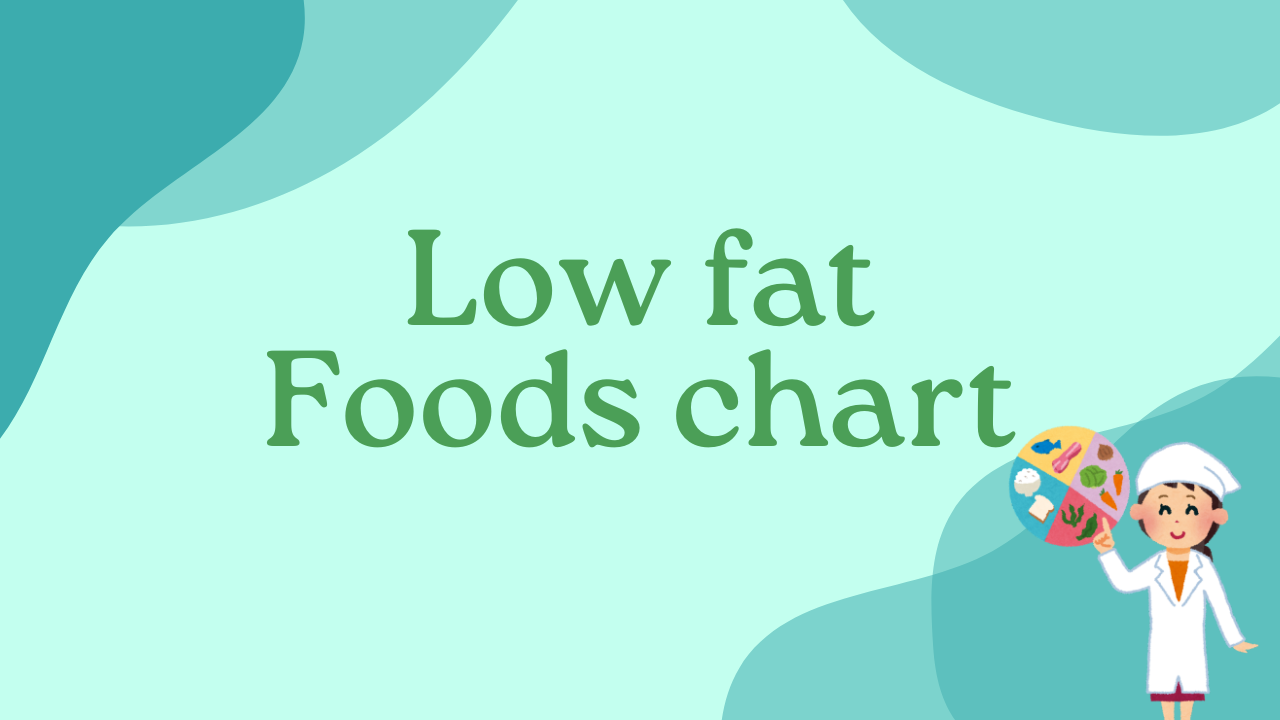
Whether you’re recovering from gallbladder surgery, dealing with liver issues, or just trying to feel a little lighter, having a solid low fat foods chart is like having a cheat code for your health.
Let’s break down the world of low fat eating in a way that actually makes sense for real life.
Why Are We Even Doing This?
Before we get into the actual chart, let’s talk about why fat gets such a bad reputation.
The truth is, your body actually needs fat. It’s not the villain in the story.
Fat helps your brain work, keeps your skin looking decent, and helps you absorb vitamins.
The problem is the amount and the type.
When you eat way too much fat, especially the saturated kind found in fried food and heavy meats, your digestive system has to work overtime.
If your gallbladder is gone or your liver is stressed, your body basically throws a red flag and says “I can’t handle this.”
That’s when you get the bloating, the “stomach drops,” and the general feeling of being a human slug.
Lowering your fat intake helps your system catch its breath and process things smoothly.
It’s about efficiency, not deprivation.
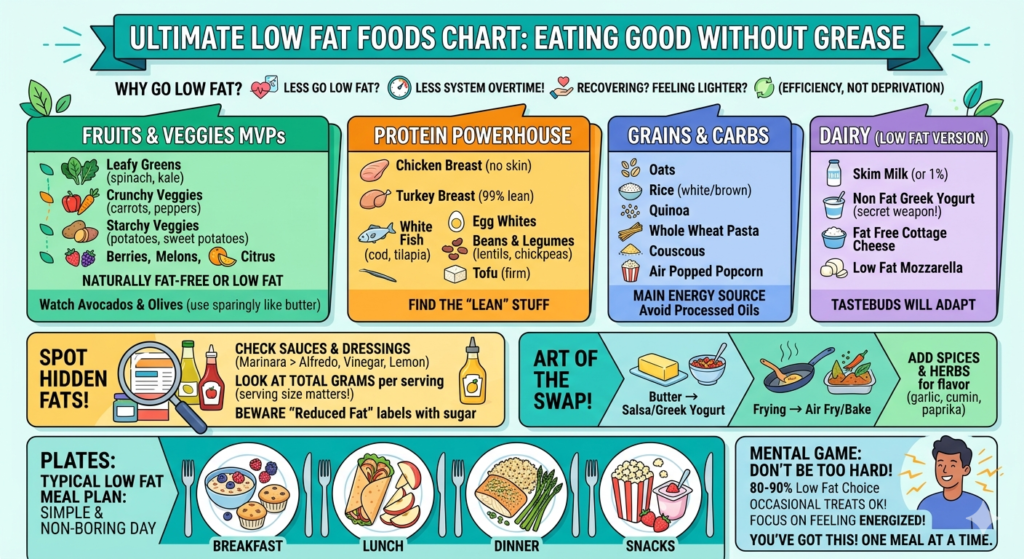
The Low Fat Foods Chart: Your New Shopping List
I’ve broken this down into categories so you can literally just pull this up on your phone when you’re standing in the middle of the grocery store feeling overwhelmed.
The Fruit and Veggie MVP’s
This is the easy part. Almost every fruit and vegetable is naturally fat free or extremely low in fat.
The only “watch out” here is avocados and olives.
I love a good avocado toast as much as the next person, but avocados are packed with healthy fats.
If you’re on a strict low fat diet, you have to treat avocado like butter, use it sparingly.
- Leafy Greens: Spinach, kale, arugula, romaine. (Zero fat, high vibes).
- Crunchy Veggies: Carrots, celery, cucumbers, bell peppers.
- Starchy Veggies: Potatoes and sweet potatoes. (Just don’t fry them or load them with sour cream).
- Berries: Strawberries, blueberries, raspberries. (The best low fat snack).
- Melons: Watermelon, cantaloupe, honeydew.
- Citrus: Oranges, lemons, limes, grapefruit.
The Protein Powerhouse
This is where things usually get tricky. Meat is where most people accidentally consume massive amounts of hidden fat.
The goal here is to find the “lean” stuff.
- Egg Whites: All the protein, zero fat. You can make a massive omelet with egg whites and veggies and feel like a king.
- White Fish: Cod, tilapia, halibut, and haddock. These are super light and easy on the stomach.
- Chicken Breast: The gold standard. Just make sure you take the skin off. The skin is where the fat lives.
- Turkey Breast: Look for the 99% lean ground turkey if you’re making tacos or chili.
- Beans and Legumes: Lentils, chickpeas, black beans, and kidney beans. They have zero fat and a ton of fiber.
- Tofu: Specifically the firm or extra firm kind. It’s a great plant based protein that is relatively low in fat compared to beef.
Grains and Carbs
Carbs are not your enemy here. In fact, when you’re low fat, carbs are going to be your main source of energy.
The trick is to avoid grains that are processed with oils or fats.
- Oats: Great for breakfast and super filling.
- Rice: White rice or brown rice are both fine. Just don’t fry it.
- Quinoa: High protein and low fat.
- Whole Wheat Pasta: Just watch the sauces. Marinara is your friend; Alfredo is your enemy.
- Couscous: Fast to cook and totally fat free.
- Air Popped Popcorn: The ultimate “I need to crunch on something” snack. Just skip the butter.
Dairy (The Low Fat Version)
If you love cheese and milk, this part might be a little bit of a struggle at first, but your taste buds will adapt.
- Skim Milk or 1% Milk: A classic swap.
- Non Fat Greek Yogurt: This is a secret weapon. You can use it in place of sour cream on tacos or as a base for smoothies.
- Fat Free Cottage Cheese: Great for a quick high protein snack.
- Low Fat Mozzarella: If you absolutely need cheese, this is usually the safest bet in small amounts.
How to Spot the “Hidden” Fats
One of the biggest mistakes I made when I first started looking into nutrition was ignoring the labels on sauces and dressings.
You can have a perfectly healthy, low fat salad, but the moment you drench it in Ranch dressing, you’ve just added 20 grams of fat.
It’s a trap.
Always check the serving size. A “serving” of salad dressing is usually two tablespoons.
Most people use way more than that.
Switch to balsamic vinegar, lemon juice, or even a little bit of mustard to flavor your food without adding fat.
Also, be careful with “Reduced Fat” labels.
Sometimes companies take out the fat but add a massive amount of sugar to make it taste better.
You’re trying to help your body, not give it a sugar crash.
Always look at the total grams of fat per serving on the back of the package, not just the marketing on the front.
The Art of the Swap
Living low fat is all about the “this for that” mentality.
It’s like a game.
Instead of butter on your baked potato, try a little bit of salsa or fat free Greek yogurt.
Instead of frying your chicken in oil, use an air fryer or bake it with a bunch of spices.
Speaking of spices, use them!
Fat carries flavor, so when you take the fat away, you need to compensate with herbs and spices.
Garlic powder, onion powder, smoked paprika, and cumin can make a bland piece of chicken taste like a gourmet meal.
Don’t be afraid to experiment.
A Typical Low Fat Meal Plan
If you’re feeling stuck on how to put this all together, here is what a normal, non boring day could look like.
Breakfast: A big bowl of oatmeal made with water or skim milk, topped with a handful of blueberries and a sprinkle of cinnamon. Maybe a couple of egg white muffins on the side with spinach and peppers.
Lunch: A massive turkey and veggie wrap using a whole wheat tortilla. Load it up with sprouts, cucumbers, tomatoes, and some mustard. Add a side of apple slices or some baby carrots.
Dinner: Baked cod seasoned with lemon and herbs, served with a side of quinoa and steamed asparagus. If you’re still hungry, a small baked sweet potato (without the butter) is a great filler.
Snacks: Air popped popcorn with a dash of sea salt, or a fat free Greek yogurt cup with a few sliced strawberries.
The Mental Game: Don’t Be Too Hard on Yourself
Here is the thing.
You’re human. You’re 22, or 30, or 50, and you’re going to want a piece of pizza eventually.
If you slip up and have a high fat meal, the world isn’t going to end.
Your body is resilient.
The goal isn’t to be “perfect” 100% of the time.
The goal is to make the low fat choice 80% to 90% of the time so that your body can handle the occasional treat.
If you treat this like a strict “diet” that you hate, you’re going to quit in three days.
If you treat it like a new way of fueling your body so you can feel better and have more energy, it becomes a lot easier to stick to.
Think about how you feel after a greasy burger versus how you feel after a fresh, low fat meal.
The energy difference is real.
Focus on the feeling of being “light” and “energized” rather than focusing on what you’re “missing.”
Final Thoughts
Taking control of your diet is honestly one of the most adult things you can do.
It’s about respecting your body and giving it what it needs to function at its best.
This low fat foods chart is just a tool to help you get there.
Print it out, save it to your phone, or just memorize the big ones.
Remember to keep it simple. Eat more plants, choose lean proteins, watch your sauces, and drink plenty of water.
Your digestion will thank you, your energy levels will thank you, and you’ll realize that life without the grease is actually pretty great.
You’ve got this. One meal at a time.