Let’s be incredibly real for a second. We have all been there standing in the liquor aisle or staring at a cocktail menu, trying to figure out which choice isn’t going to absolutely wreck our progress.
Whether you are watching your A1C, trying to stay in ketosis, or just wanting to avoid that post-drink brain fog, the sugar content in your glass matters.
Which Alcohol Has the Least Amount of Sugar
If you are like me, you probably grew up hearing that all alcohol is basically liquid sugar. But as we have already debunked, alcohol itself (ethanol) doesn’t turn into sugar in your body.
However, that doesn’t mean your drink is sugar-free. Many drinks are packed with residual sugars from the fermentation process or, even worse, the sugary mixers we add to them.
If you want to enjoy a night out without the massive glucose spike, you need to know which bottles are your best friends and which ones are total saboteurs.
Here is the fully human, non-boring guide which alcohol has the least amount of sugar.
The Undisputed Champions: Pure Distilled Spirits
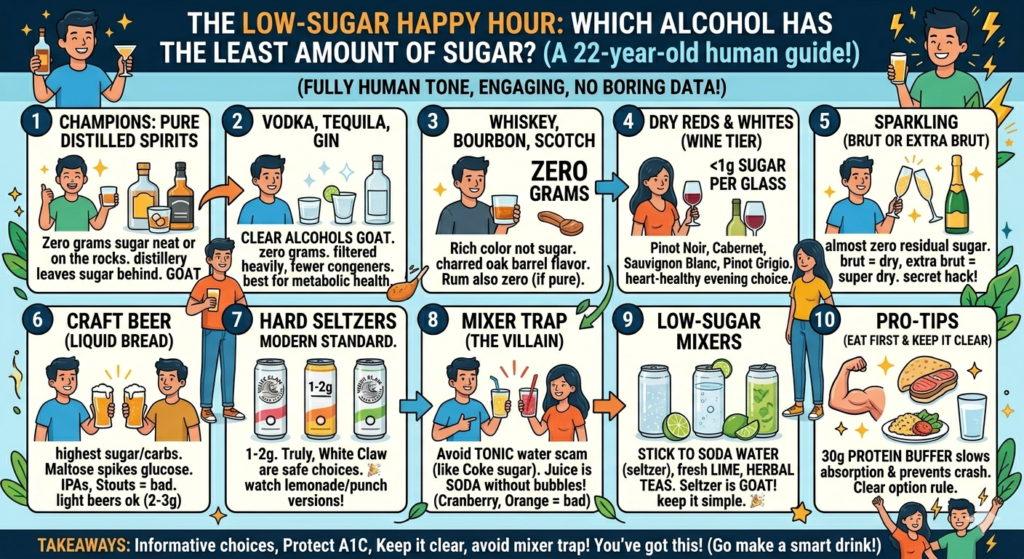
If we are talking about a true zero-sugar experience, pure distilled spirits are the GOAT.
During the distillation process, the sugar is essentially left behind, leaving you with just the alcohol and water. This is why these are the top choice for people focusing on metabolic health or strict low-carb lifestyles.
The following spirits, when served “neat” or on the rocks, have zero grams of sugar:
Vodka: The ultimate blank canvas. It is distilled until it’s basically just ethanol and water.
Tequila: Especially Silver or Blanco tequila. It’s made from the blue agave plant, and while agave syrup is high in sugar, the fermented and distilled tequila has zero.
Gin: Distilled with botanicals like juniper berries, but the process ensures no sugar remains in the final product.
Whiskey, Bourbon, and Scotch: Even though they have that rich, caramel-like color and flavor, that comes from the charred oak barrels they age in, not from sugar.
Rum: This one trips people up because it’s made from sugarcane. However, pure distilled rum (not the spiced or flavored kind) is sugar-free once it hits the bottle.
The catch? These only stay zero-sugar if you don’t mix them with a giant splash of cranberry juice or tonic water.
The Wine Tier List: Dry vs Sweet
Wine is where things get a little more complicated. Since wine is made from grapes, it starts with a lot of natural sugar.
During fermentation, yeast eats the sugar and turns it into alcohol. If the winemaker lets the yeast eat all the sugar, you get a dry wine. If they stop the process early, you get residual sugar, which makes the wine sweet.
If you are looking for the lowest sugar impact, you want to stick to these:
Dry Reds (Pinot Noir, Cabernet Sauvignon, Merlot): These usually have less than 1 gram of sugar per glass. They are a solid choice for a heart-healthy evening.
Dry Whites (Sauvignon Blanc, Pinot Grigio): These are also very low, typically around 1 to 1.5 grams of sugar per five-ounce pour.
Sparkling Wine (Brut or Extra Brut): This is the secret hack. Brut is the French word for dry. An “Extra Brut” champagne or cava has almost zero residual sugar.
Avoid these: Riesling, Moscato, Port, and any dessert wines. These are essentially liquid candy and will cause a massive insulin response.
The Beer Situation: Liquid Bread
I hate to be the bearer of bad news for the craft beer lovers out there, but beer is generally the highest sugar/carb option.
Beer is made from fermented grains, and it often contains maltose, a type of sugar that can spike your glucose levels quite effectively.
If you are a beer person but want to keep the sugar low, you have two options:
- Light Beers: Brands like Michelob Ultra or Miller Lite have significantly fewer carbs and sugars than a heavy IPA or a Stout. We’re talking 2-3 grams of carbs versus 15-20 grams.
- Ultra-Low Carb Beers: Some newer brands are specifically designed for the keto community and have almost zero grams of carbs.
But honestly, if you are really trying to stabilize your blood sugar overnight, beer is probably the hardest one to manage.
Hard Seltzers: The Modern Standard
There is a reason hard seltzers have taken over the world. They are basically the industry’s answer to the low sugar demand.
Most standard hard seltzers (like White Claw or Truly) use a fermented sugar base or a malt base that is filtered and then flavored with natural flavors.
Most of these sit at around 1 to 2 grams of sugar per can. They are a very safe choice for a casual day, but keep an eye on the label some of the newer “lemonade” or “punch” versions have started adding more sugar back in for flavor.
The “Mixer Trap”: Where the Real Sugar Lives
You could buy the most expensive, zero-sugar, 100% blue agave tequila in the world, but if you mix it with a pre-made margarita mix, you are drinking upwards of 30 grams of sugar in one sitting.
The mixer is almost always the villain in this story.
Tonic Water is a Scam: A lot of people think gin and tonic is a healthy drink. It’s not. Tonic water has almost as much sugar as a regular Coke.
Juice is Just Soda Without the Bubbles: Orange, cranberry, and pineapple juice are all pure sugar bombs.
The Solution: Stick to soda water (seltzer), fresh lime juice, or herbal teas as your mixers. If you need a little sweetness, use a tiny bit of stevia or monk fruit drops.
Pro-Tip: The 30g Protein Buffer
If you’ve been following my other guides, you know I’m obsessed with the 30g protein club. This applies to drinking too!
If you are going to have a glass of wine or a low-sugar cocktail, eat a high-protein meal beforehand.
Getting at least 30 grams of protein in your system before you start drinking provides a massive buffer for your liver and your blood sugar. It slows down the absorption of the alcohol and prevents that shaky, hypoglycemic crash later in the night.
It is the ultimate hack for staying focused and energetic the next morning instead of feeling like a zoned-out zombie.
Why Clear is Usually Better
When in doubt, choose the clear option.
Clear spirits like vodka, gin, and silver tequila are filtered more heavily and generally contain fewer congeners the byproducts of fermentation that contribute to hangovers and inflammation.
Darker alcohols like brandy or cheap dark rums often have caramel coloring or added flavorings that can include hidden sugars. Keeping it clear is an easy rule of thumb to keep your metabolic health on track.
The Hidden Sugar in Skinny Drinks
Be careful with skinny margaritas or low-cal bottled cocktails.
Sometimes these brands replace sugar with artificial sweeteners like aspartame or sucralose. While these don’t raise your blood sugar immediately, they can mess with your gut health and potentially trigger cravings for real sugar later on.
I always tell people: keep it simple. A spirit, a bubble (soda water), and a fruit (fresh lime or lemon). You don’t need a chemical lab in your glass to stay healthy.
Final Encouragement
You don’t have to be perfect to see results. Being fully human means enjoying a drink with friends without feeling guilty about it.
The goal isn’t to live a life of restriction; it’s to live a life of informed choices.
Now that you know that a dry red wine or a tequila soda is your best bet, you can walk into any bar and order with confidence. You are protecting your A1C, you are keeping your energy steady, and you are prioritizing your long-term health.
Start with one small switch. Next time you’re out, swap that gin and tonic for a gin and soda with extra lime. Notice how you feel. Notice if you wake up with more focus and less of that sugary feeling in your mouth.
You’ve got this! Your body is incredible at healing when you give it the right environment.
Keep making those smart, high-protein choices, stay hydrated, and enjoy your evening!