
In this article, we’ll break down the differences between Diet Coke and Coke Zero from their ingredients to taste and health impacts so that you can choose the right one for you.
Coca-Cola has created multiple sugar free alternatives for those who love soda but want to cut down on sugar and calories. Two of the most popular options are Diet Coke and Coke Zero Sugar.
Table of Contents
They might seem identical, but there are key differences between the two.
The Main Difference Between Diet Coke and Coke Zero
Diet Coke and Coke Zero may seem similar but they have differences in flavor, ingredients, and branding.
Let’s take a closer look at what sets them apart.
1. Flavor Profile
One of the biggest differences is the taste.
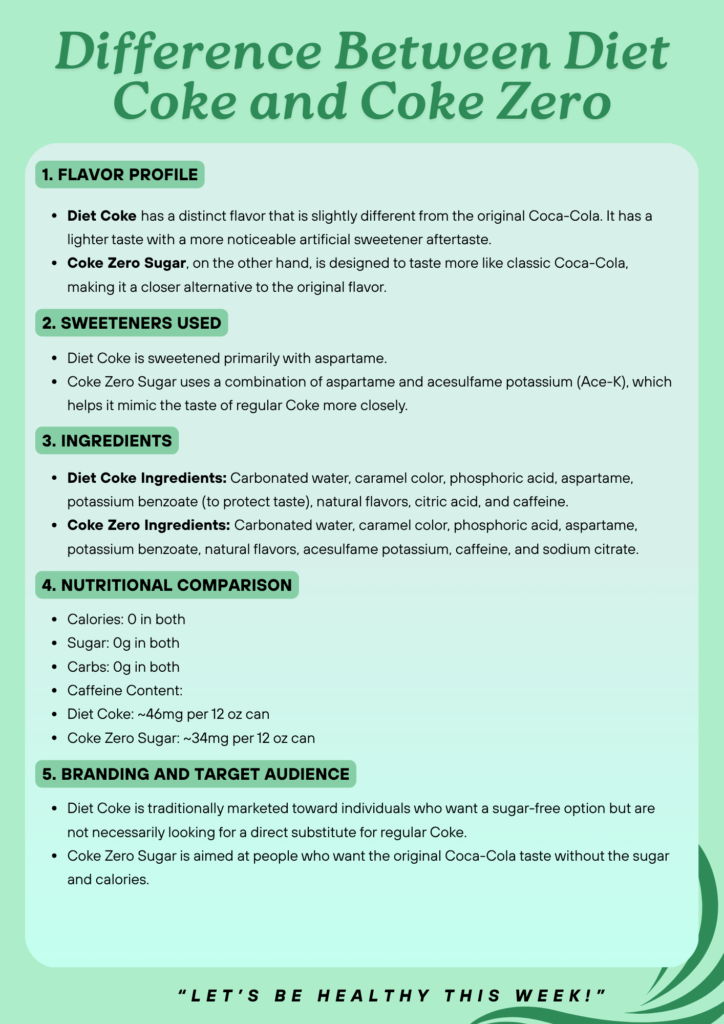
- Diet Coke has a distinct flavor that is slightly different from the original Coca-Cola. It has a lighter taste with a more noticeable artificial sweetener aftertaste.
- Coke Zero Sugar, on the other hand, is designed to taste more like classic Coca-Cola, making it a closer alternative to the original flavor.
2. Sweeteners Used
Both sodas are sugar-free, but they use different sweetener blends:
- Diet Coke is sweetened primarily with aspartame.
- Coke Zero Sugar uses a combination of aspartame and acesulfame potassium (Ace-K), which helps it mimic the taste of regular Coke more closely.
3. Ingredients
While both drinks are calorie-free and sugar-free, their ingredient lists have slight variations:
- Diet Coke Ingredients: Carbonated water, caramel color, phosphoric acid, aspartame, potassium benzoate (to protect taste), natural flavors, citric acid, and caffeine.
- Coke Zero Ingredients: Carbonated water, caramel color, phosphoric acid, aspartame, potassium benzoate, natural flavors, acesulfame potassium, caffeine, and sodium citrate.
The biggest difference? Coke Zero has acesulfame potassium (Ace-K), which enhances sweetness without adding calories.
4. Nutritional Comparison
Since both drinks are calorie-free and sugar-free, their nutritional differences are minimal:
- Calories: 0 in both
- Sugar: 0g in both
- Carbs: 0g in both
- Caffeine Content:
- Diet Coke: ~46mg per 12 oz can
- Coke Zero Sugar: ~34mg per 12 oz can
Diet Coke has slightly more caffeine than Coke Zero.
5. Branding and Target Audience
Coca-Cola markets these two drinks differently:
- Diet Coke is traditionally marketed toward individuals who want a sugar-free option but are not necessarily looking for a direct substitute for regular Coke.
- Coke Zero Sugar is aimed at people who want the original Coca-Cola taste without the sugar and calories.
Which One Is Healthier?
Both Diet Coke and Coke Zero are healthier alternatives to regular soda in terms of calories and sugar content, but they do contain artificial sweeteners.
Pros:
✅ No sugar, making them diabetic-friendly
✅ Zero calories, which can help with weight management
✅ No impact on blood sugar levels
Cons:
❌ Contains artificial sweeteners, which some studies suggest may impact gut health
❌ Acidity can contribute to dental erosion
❌ Some people experience bloating or digestive discomfort
In general, moderation is key when consuming artificially sweetened beverages.
Which One Should You Choose?
The choice between Diet Coke and Coke Zero depends on personal preference:
- If you prefer a lighter, crisper taste, go for Diet Coke.
- If you want a closer match to original Coca-Cola, choose Coke Zero Sugar.
- If you want less caffeine, Coke Zero Sugar has slightly less than Diet Coke.
Conclusion
While both Diet Coke and Coke Zero Sugar offer a sugar-free alternative to regular Coke, their taste, ingredients, and branding set them apart.
Diet Coke has a unique flavor and slightly more caffeine, while Coke Zero is formulated to taste more like classic Coca-Cola.
Ultimately, the choice comes down to personal taste and preference. If you’re looking to cut down on sugar but still want the Coke experience, either of these options can be a great fit!
🥤 Which one do you prefer—Diet Coke or Coke Zero? Let us know!